

Dubai has established itself as one of the world’s most attractive destinations for entrepreneurs, startups, and multinational corporations seeking to expand their operations into the Middle East. Over the past two decades, the emirate has built a reputation as a global hub for trade, finance, logistics, tourism, and innovation. As a result, business setup in Dubai has become one of the most popular options for international investors looking to establish a presence in a stable and rapidly growing market.
However, before entrepreneurs decide to start a business in Dubai, one of the most important questions they ask is:
What is the cost of setting up a company in Dubai?
The answer is not always straightforward. The cost of company formation in Dubai depends on several factors including the business jurisdiction, license type, visa requirements, office space, and regulatory approvals.
In this comprehensive guide, we will explain everything entrepreneurs need to know about the cost of business setup in Dubai in 2026, including detailed breakdowns of mainland companies, free zone companies, offshore structures, and operational expenses.
Why Dubai Is One of the Best Places to Start a Business?
Before analyzing the costs involved in company formation in Dubai, it is important to understand why so many entrepreneurs choose Dubai as their preferred destination for business expansion.
Dubai offers a number of advantages that make it an attractive business hub for investors from around the world.
Strategic Global Location
Dubai is strategically located between Europe, Asia, and Africa. This geographical advantage allows companies based in Dubai to access markets that include more than two billion consumers.
Businesses operating in Dubai can easily reach major global markets within a few hours through world-class airports and seaports.
Investor-Friendly Policies
The UAE government has introduced several reforms in recent years to encourage foreign investment and entrepreneurship. These reforms include:
- 100% foreign ownership in most sectors
- simplified company registration procedures
- long-term residency visas for investors and entrepreneurs
- flexible business licensing frameworks
These policies have significantly improved the ease of doing business in Dubai.
Strong Infrastructure
Dubai is known for its advanced infrastructure, including modern transportation networks, digital connectivity, and world-class commercial real estate.
Businesses benefit from access to:
- international airports and shipping ports
- high-speed internet and telecommunications
- advanced logistics systems
- premium office spaces and coworking environments
These infrastructure advantages contribute to Dubai’s position as a leading global business destination.
Types of Company Structures in Dubai
The cost of setting up a company in Dubai largely depends on the type of business structure chosen.
Entrepreneurs typically choose between three primary options:
- Mainland companies
- Free zone companies
- Offshore companies
Each structure has its own regulatory requirements, advantages, and cost implications.
Mainland Company Setup in Dubai
Mainland companies are licensed by the Department of Economy and Tourism (DET) in Dubai. These companies can operate anywhere within the UAE market and are allowed to work directly with government entities.
Because of this flexibility, many businesses choose Mainland company formation in UAE.
Advantages of Mainland Companies:
Mainland companies offer several benefits including:
- Ability to trade anywhere in the UAE
- Access to government contracts
- Unlimited business opportunities within the local market
- Flexibility to open multiple branches
These advantages make mainland companies particularly attractive for businesses that want to operate locally in Dubai.
Cost of Mainland Company Setup in Dubai
The cost of mainland company formation in Dubai varies depending on several factors including business activity, office requirements, and visa allocations.
Typical costs include:
Trade License Fees
The trade license is one of the most important requirements for company registration in Dubai.
The cost of a mainland trade license generally ranges between:
AED 10,000 and AED 20,000
The exact amount depends on the business activity selected.
Company Registration Fees
Registration costs may include:
- initial approval from authorities
- trade name reservation
- memorandum of association preparation
- registration with the Department of Economy and Tourism
These costs typically range from:
AED 8,000 to AED 15,000
Office Space Costs
Mainland companies are usually required to have a physical office space registered with Ejari.
Office costs can vary significantly depending on the location.
Typical office costs include:
Small office or coworking space
AED 15,000 – AED 40,000 annually
Medium office space
AED 40,000 – AED 80,000 annually
Premium commercial office
AED 100,000 or more annually
Visa Costs
Most entrepreneurs require UAE residency visas after company formation.
Visa costs usually include:
- entry permit
- medical examination
- Emirates ID
- visa stamping
Each visa may cost between:
AED 3,500 and AED 7,000
The number of visas available depends on office size and company structure.
Free Zone Company Setup in Dubai
Free zones are special economic areas that offer incentives designed to attract foreign investment.
Many international entrepreneurs prefer free zone company formation in Dubai because these zones offer simplified registration processes and full foreign ownership.
Free zones are particularly popular for startups, consulting firms, trading companies, and digital businesses.
Advantages of Free Zone Companies:
Free zone companies offer several benefits including:
- 100% foreign ownership
- tax benefits on qualifying income
- simplified company registration
- flexible office solutions
- easier visa processing
These benefits make free zones an attractive option for entrepreneurs who want to establish a presence in Dubai quickly.
Cost of Free Zone Company Setup in Dubai
The cost of free zone company formation in Dubai typically ranges between:
AED 15,000 and AED 45,000
The cost depends on factors such as:
- free zone authority
- license type
- visa package
- office solution
Many free zones offer bundled packages that include:
- trade license
- company registration
- flexi desk workspace
- visa eligibility
Some startup packages are available for less than AED 20,000, making free zones one of the most affordable options for entrepreneurs
Popular Free Zones in Dubai
Dubai has more than 30 free zones serving different industries.
Some of the most popular options include:
- Dubai Multi Commodities Centre (DMCC)
- Dubai Airport Free Zone (DAFZA)
- Dubai Silicon Oasis
- Dubai Internet City
- Meydan Free Zone
Each free zone specializes in certain industries and offers different licensing packages.
Offshore Company Formation in Dubai
Offshore companies are commonly used for international business activities such as:
- Holding company structures
- International trading
- Asset protection
- Intellectual property management
Unlike mainland companies, offshore companies cannot conduct business directly within the UAE market.
Cost of Offshore Company Setup
The cost of offshore company formation typically ranges between:
AED 12,000 and AED 20,000
Offshore companies are often used as part of larger international corporate structures.
Detailed Breakdown of Business Setup Costs in Dubai
When entrepreneurs research the cost of setting up a company in Dubai, they often focus only on the trade license fee. However, the total cost of company formation in Dubai involves several components including registration fees, office requirements, visa processing, and compliance obligations.
Understanding these components helps entrepreneurs accurately estimate the total investment required to start a business in Dubai.
Below is a detailed breakdown of the main cost elements involved in Dubai business setup.
Trade License Cost in Dubai
A trade license is the legal authorization that allows a business to operate in Dubai. Without a valid license issued by the relevant authority, companies cannot conduct commercial activities within the UAE.
The cost of a Dubai trade license depends on several factors including the business activity, jurisdiction, and type of license.
The three most common types of licenses include:
Commercial License
A commercial license is issued to companies involved in trading activities such as import, export, distribution, and general trading.
Typical cost range:
AED 10,000 – AED 18,000
Commercial licenses are among the most popular options for entrepreneurs who want to establish trading companies in Dubai.
Professional License
Professional licenses are issued to individuals and companies providing specialized services such as consulting, accounting, legal advisory, IT services, marketing, and management consulting.
Typical cost range:
AED 7,000 – AED 15,000
Professional licenses are widely used by consultants, freelancers, and service providers.
Industrial License
Industrial licenses are required for companies engaged in manufacturing, production, or industrial activities.
These licenses typically require additional approvals from regulatory authorities and may involve higher costs.
Typical cost range:
AED 15,000 – AED 25,000
Industrial licenses are usually issued for factories and production facilities.
Company Registration Fees
In addition to the trade license cost, businesses must also pay company registration fees during the incorporation process.
These fees may include:
- trade name reservation
- initial approval from authorities
- memorandum of association preparation
- registration with the licensing authority
The cost of company registration typically ranges between:
AED 8,000 – AED 15,000
These costs are usually paid during the initial stage of the company formation process in Dubai.
Visa Costs for Investors and Employees
Most entrepreneurs establishing a company in Dubai will require UAE residency visas for themselves and their employees.
Visa processing involves several steps including:
- Entry permit issuance
- Medical examination
- Emirates ID registration
- Visa stamping in the passport
The cost of a residency visa usually ranges between:
AED 3,500 – AED 7,000 per visa
The number of visas available to a company often depends on the office space leased and the type of license obtained.
Some free zones offer license packages that include a limited number of visas.
Office Space and Ejari Registration
Mainland companies must usually lease a physical office space to operate legally in Dubai.
The office lease must be registered under the Ejari system, which is the official tenancy registration platform in Dubai.
Office costs vary depending on location, size, and commercial building category.
Typical office rental costs include:
- Small office or shared workspace
AED 15,000 – AED 40,000 annually - Medium office space
AED 40,000 – AED 80,000 annually - Premium commercial office
AED 100,000+ annually
Some entrepreneurs choose coworking spaces or serviced offices to reduce initial costs.
Free zones often provide flexi-desk solutions, which allow companies to operate with minimal office requirements.
Accounting and Bookkeeping Costs
Businesses operating in the UAE must maintain proper financial records in accordance with regulatory requirements.
Accounting and bookkeeping services may include:
- Transaction recording
- Financial statement preparation
- VAT reporting
- Corporate tax compliance
Typical accounting service costs range between:
AED 5,000 – AED 20,000 annually depending on business size.
Companies with higher transaction volumes may require more advanced accounting support.
Corporate Tax in the UAE
One of the most significant developments in the UAE business environment in recent years has been the introduction of corporate tax.
The UAE implemented corporate tax in 2023 to align with international tax standards and enhance transparency.
Under the current regulations:
Businesses pay 9% corporate tax on profits exceeding AED 375,000.
Companies earning profits below this threshold are not required to pay corporate tax.
Corporate Tax Registration Requirements
All companies operating in the UAE must complete corporate tax registration with the Federal Tax Authority.
Businesses must also ensure compliance with the following obligations:
- Maintaining proper accounting records
- Filing annual tax returns
- Maintaining transfer pricing documentation where applicable
Failure to comply with corporate tax regulations may result in penalties.
Entrepreneurs planning business setup in Dubai should consider tax compliance costs as part of their operational expenses.
VAT Registration in Dubai
Value Added Tax (VAT) is another important consideration for businesses operating in the UAE.
VAT was introduced in 2018 and applies to most goods and services at a standard rate of 5%.
Companies must register for VAT if their annual taxable turnover exceeds AED 375,000.
Businesses with turnover between AED 187,500 and AED 375,000 may voluntarily register.
VAT compliance typically involves:
- VAT registration
- Quarterly VAT return filing
- Maintaining tax invoices and records
Professional VAT compliance services may cost between AED 3,000 and AED 10,000 annually.
Step-by-Step Process to Start a Business in Dubai
Entrepreneurs looking to start a business in Dubai must follow a structured registration process.
The company formation process typically includes the following steps.
Step 1: Choose Business Activity
The first step is selecting the appropriate business activity.
Dubai offers thousands of licensed activities covering industries such as:
- Trading
- Consulting
- Technology
- Logistics
- Manufacturing
- Financial services
The chosen activity determines the type of license required.
Step 2: Choose Business Jurisdiction
Entrepreneurs must decide whether to establish a company in:
- Mainland Dubai
- A free zone
- Offshore jurisdiction
The choice depends on business goals, operational requirements, and budget.
Step 3: Reserve Trade Name
The company must reserve a unique trade name with the relevant authority.
Trade names must follow UAE naming regulations and cannot include restricted words.
Step 4: Obtain Initial Approval
The licensing authority must provide initial approval before the company can proceed with incorporation.
This confirms that the business activity is permitted.
Step 5: Prepare Legal Documents
Legal documentation must be prepared during the incorporation process.
This may include:
- Memorandum of association
- Shareholder agreements
- Lease agreements
For mainland companies, certain documents may require notarization.
Step 6: Obtain Trade License
After submitting all required documentation and paying the necessary fees, the licensing authority will issue the trade license.
The trade license officially allows the company to operate in Dubai.
Step 7: Apply for Visas and Bank Account
After obtaining the trade license, the company can proceed with:
- Visa processing for shareholders and employees
- Opening a corporate bank account
- Registering for tax if required
At this stage, the company becomes fully operational.
Comparing Free Zone vs Mainland Business Setup Costs
Entrepreneurs often compare free zone company setup in Dubai with mainland company formation before making a decision.
Both structures have different advantages and cost implications.
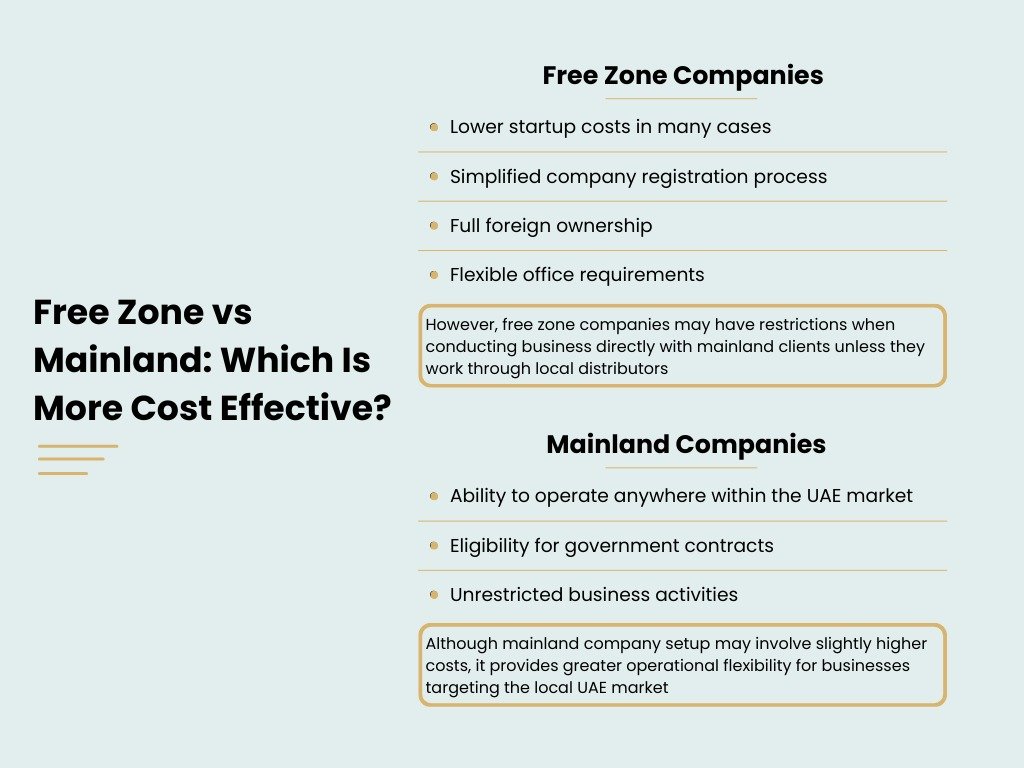
Free zone companies typically offer lower startup costs and simplified registration procedures.
Mainland companies provide greater operational flexibility and direct access to the UAE market.
The choice ultimately depends on the business model and expansion plans.
Best Free Zones in Dubai for Company Setup
Dubai hosts more than thirty specialized free zones designed to support different industries such as technology, finance, logistics, media, healthcare, and international trading. Choosing the right free zone is important because it influences both the cost of company formation in Dubai and the operational flexibility available to the business.
Below are some of the most popular free zones entrepreneurs consider when planning free zone company setup in Dubai.
Dubai Multi Commodities Centre (DMCC)
DMCC is widely regarded as one of the most prestigious free zones in the UAE and has repeatedly been ranked among the top free zones globally. It is particularly popular among businesses involved in commodities trading, financial services, consulting, and global trade.
Key advantages include:
- Strong global reputation
- Access to international banking partners
- lexible office options
- Extensive networking ecosystem
The cost of company formation in DMCC typically ranges between AED 35,000 and AED 60,000 depending on the license type and office package.
Dubai Airport Free Zone (DAFZA)
DAFZA is located near Dubai International Airport and is ideal for companies involved in logistics, aviation services, electronics trading, and international distribution.
Advantages include:
- Proximity to the airport and logistics networks
- Tax incentives
- Advanced infrastructure
- Strong regulatory environment
Although the setup cost in DAFZA can be slightly higher than some other free zones, the strategic location often justifies the investment.
Meydan Free Zone
Meydan Free Zone has gained popularity in recent years due to its relatively affordable packages and simplified digital company registration process.
Benefits include:
- Quick online registration
- Affordable startup packages
- Flexible licensing options
- Ability to operate remotely
Startup packages in Meydan Free Zone often begin around AED 12,000 to AED 15,000, making it one of the more cost-effective options for startups and entrepreneurs.
Dubai Silicon Oasis
Dubai Silicon Oasis is a technology-focused free zone designed to support innovation and startups in the technology sector.
Companies involved in software development, artificial intelligence, fintech, and IT consulting often choose this jurisdiction.
Key advantages include:
- Modern infrastructure
- Support for technology startups
- Integration with research and development facilities
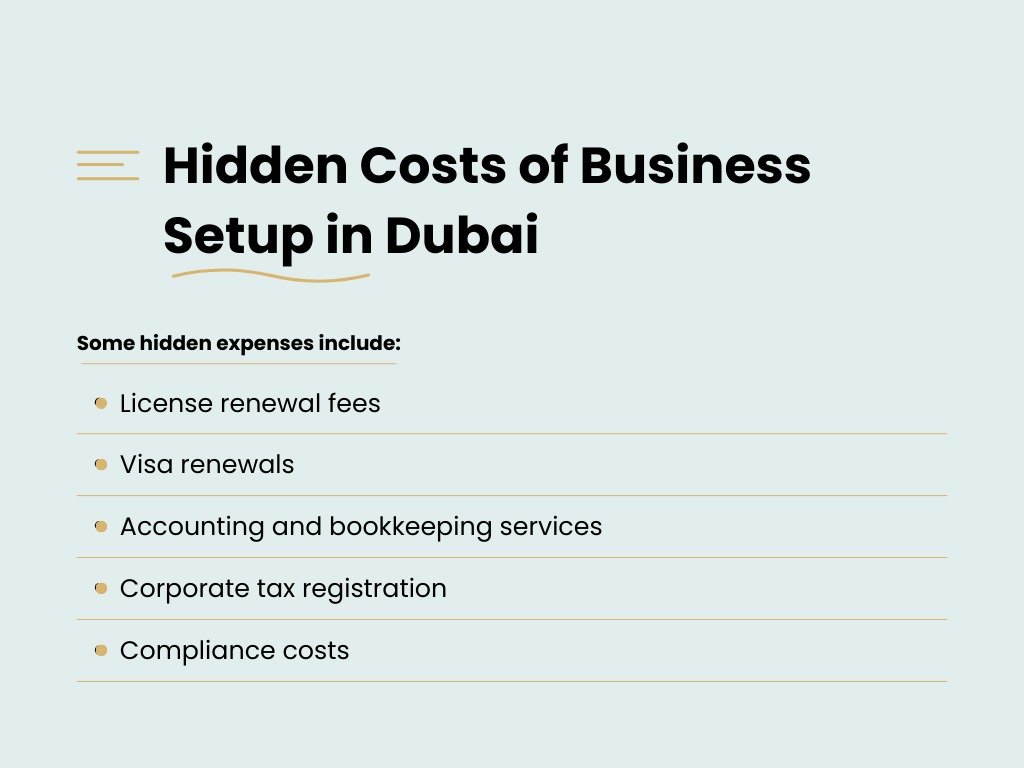
Hidden Costs Entrepreneurs Often Overlook
Many entrepreneurs researching the business setup Dubai cost focus only on initial registration fees. However, running a company in Dubai involves ongoing operational expenses.
Understanding these costs helps entrepreneurs avoid unexpected financial challenges.
License Renewal Fees
Business licenses in Dubai must be renewed annually.
The renewal cost is often similar to the initial licensing fee and can range between:
AED 10,000 and AED 20,000 depending on the license type.
Failure to renew a license on time may result in fines or operational restrictions.
Visa Renewal Costs
Residency visas issued to investors and employees typically require renewal every two or three years.
Renewal costs may include:
- Visa processing fees
- Medical examination
- Emirates ID renewal
These costs are similar to the original visa issuance fees.
Office Lease Renewals
Office leases must also be renewed periodically. Rental prices can vary depending on market demand and commercial property availability.
Businesses located in prime areas may experience significant rental increases during renewal periods.
Regulatory Compliance
Companies must also comply with regulatory obligations such as:
- Corporate tax filings
- VAT reporting
- Accounting record maintenance
Professional advisory services may be required to ensure compliance with regulatory frameworks.
Strategies to Reduce Business Setup Costs in Dubai
Although Dubai offers excellent opportunities for entrepreneurs, it is still important to manage startup expenses effectively.
Several strategies can help reduce the cost of company formation in Dubai.
Choose the Right Free Zone
Different free zones offer different pricing structures. Some free zones provide startup-friendly packages designed specifically for small businesses and entrepreneurs.
Selecting the right free zone can significantly reduce initial registration costs.
Start with a Flexi Desk
Instead of leasing a full office space immediately, many entrepreneurs choose flexi-desk solutions provided by free zones.
These shared workspace options allow companies to operate legally while minimizing office rental expenses.
Limit Visa Allocations Initially
Entrepreneurs may initially apply only for essential visas and expand their visa allocation later as the business grows.
This strategy helps reduce initial setup costs.
Use Professional Advisory Services
Although hiring consultants involves additional fees, experienced advisors can often help businesses avoid costly mistakes during the registration process.
Professional guidance can streamline company formation and ensure compliance with regulatory requirements.
The Future of Business Setup in Dubai
Dubai continues to evolve as a global business hub. The government regularly introduces initiatives aimed at improving the investment environment and attracting entrepreneurs from around the world.
Several trends are expected to shape the future of company formation in Dubai.
Digital Business Registration
Many free zones now offer fully digital company registration systems that allow entrepreneurs to establish businesses remotely.
This trend will continue to simplify the process of starting a business in Dubai.
Expansion of Free Zones
Dubai continues to develop new free zones focused on emerging industries such as artificial intelligence, blockchain technology, and digital finance.
These zones will provide specialized ecosystems for innovative businesses.
Growth of International Investment
Dubai’s strategic location and stable economic environment make it an attractive destination for international investors.
As global businesses continue expanding into the Middle East, demand for company formation services in Dubai is expected to grow significantly.
Frequently Asked Questions
What is the cheapest way to start a business in Dubai?
The most affordable option is usually free zone company formation with a flexi-desk package. Some free zones offer startup packages beginning around AED 12,000 to AED 15,000.
How long does it take to set up a company in Dubai?
Free zone companies can often be established within one to seven business days, while mainland companies typically require five to fourteen days depending on approvals.
Do foreigners need a local sponsor in Dubai?
In most sectors, foreign investors can now own 100 percent of their businesses, especially in free zones and many mainland activities.
Can I open a business in Dubai without visiting the UAE?
Yes. Many jurisdictions now allow remote company formation through digital registration platforms.
Is Dubai a good place to start a business?
Dubai is widely considered one of the best locations for entrepreneurs due to its strategic location, strong infrastructure, tax advantages, and business-friendly regulations.
Real Examples of Business Setup Costs in Dubai
One of the best ways to understand the cost of setting up a company in Dubai is to look at real-world scenarios. Different entrepreneurs have different goals, and the total investment required depends on the structure and scale of the business.
Below are three common examples of company formation structures used by entrepreneurs.
Example 1: Startup Consulting Business
An entrepreneur starting a small consulting firm may choose a free zone company setup in Dubai because it provides cost efficiency and simplified registration.
Typical cost breakdown:
- Trade license package
AED 12,000 – AED 18,000 - Flexi desk office solution
AED 3,000 – AED 5,000 - Investor visa
AED 4,000 – AED 6,000 - Business bank account setup and documentation
AED 1,000 – AED 2,000 - Estimated total startup cost
AED 20,000 – AED 30,000
This structure is ideal for consultants, freelancers, digital marketers, IT professionals, and advisory firms.
Example 2: Trading Company Setup
Trading businesses usually require a commercial license and may prefer mainland company formation to trade freely within the UAE market.
Typical cost breakdown:
- Trade license and government fees
AED 12,000 – AED 18,000 - Company registration documentation
AED 5,000 – AED 8,000 - Office space lease
AED 20,000 – AED 40,000 - Visa processing costs
AED 4,000 – AED 7,000 - Estimated total cost
AED 40,000 – AED 70,000
Trading companies may also incur additional logistics costs depending on their supply chain operations.
Example 3: International Holding Company
Some investors establish companies in Dubai as part of international corporate structures.
In this scenario, offshore company formation is often the most suitable option.
Typical cost breakdown:
- Offshore company registration
AED 12,000 – AED 15,000 - Registered agent services
AED 2,000 – AED 3,000 - Corporate documentation and compliance
AED 1,000 – AED 2,000 - Estimated total cost
AED 15,000 – AED 20,000
This structure is commonly used for asset holding and international investment strategies.
Cost of Business Setup by Emirate in the UAE
Although Dubai is the most popular location for company formation, entrepreneurs can also establish companies in other emirates within the UAE.
Each emirate offers its own licensing authorities and cost structures.
Dubai
Dubai remains the most attractive emirate for international investors due to its global connectivity and strong infrastructure.
Average business setup cost
AED 20,000 – AED 40,000
Dubai offers the widest variety of free zones and licensing authorities.
Abu Dhabi
Abu Dhabi is the capital of the UAE and has recently introduced initiatives to attract startups and technology companies.
Average business setup cost
AED 18,000 – AED 35,000
Abu Dhabi Global Market has become a major financial hub for international investors.
Sharjah
Sharjah offers cost-effective options for entrepreneurs who want to establish companies within the UAE.
Average business setup cost
AED 12,000 – AED 25,000
Many entrepreneurs choose Sharjah free zones for their affordability.
Ras Al Khaimah
Ras Al Khaimah has become popular for offshore and international business structures.
Average business setup cost
AED 10,000 – AED 20,000
RAK is particularly known for offshore company formation.
Common Mistakes Entrepreneurs Make During Business Setup
Many entrepreneurs underestimate the complexity involved in company formation in Dubai. Avoiding common mistakes can significantly reduce startup costs.
Choosing the Wrong Business Activity
Selecting an incorrect business activity may result in additional approvals or licensing restrictions.
Entrepreneurs should carefully review the list of permitted activities before submitting applications.
Ignoring Compliance Requirements
Businesses must comply with regulatory frameworks including:
- Corporate tax registration
- VAT compliance
- Accounting record maintenance
Failure to comply with these regulations can lead to financial penalties.
Overestimating Office Space Requirements
Some entrepreneurs lease large office spaces before understanding their operational needs.
Many startups can begin operations using coworking spaces or flexi desk solutions.
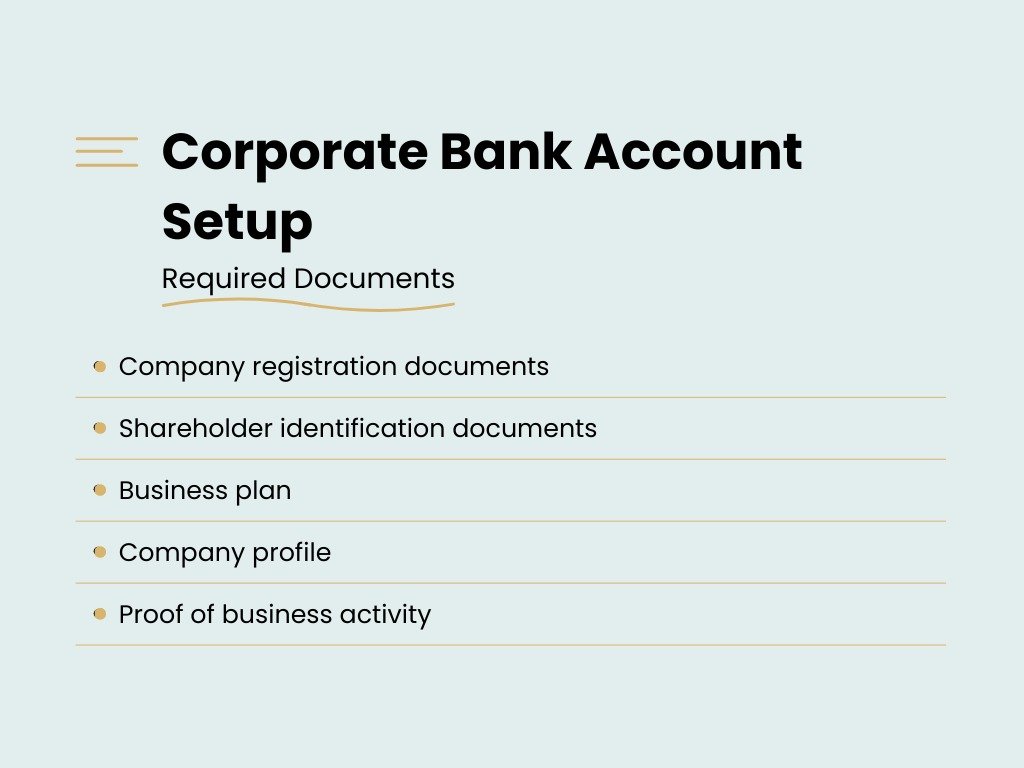
Delaying Corporate Bank Account Applications
Opening a corporate bank account can take several weeks depending on documentation requirements.
Entrepreneurs should begin the process as soon as their trade license is issued.
Government Fees Involved in Company Formation
When calculating the cost of business setup in Dubai, entrepreneurs should understand the main government fees involved.
These fees may include:
Trade name reservation
AED 600 – AED 1,000
Initial approval
AED 1,000 – AED 3,000
Trade license issuance
AED 10,000 – AED 20,000
Immigration establishment card
AED 700 – AED 1,000
Visa processing
AED 3,500 – AED 7,000
These costs may vary depending on the jurisdiction and license category.
Business Setup Cost Planning Checklist
Entrepreneurs planning company formation in Dubai can use the following checklist to estimate their startup budget.
- Trade license fees
- Company registration costs
- Office space or flexi desk package
- Investor and employee visas
- Corporate bank account setup
- Accounting and tax compliance
- License renewal fees
Using this checklist helps entrepreneurs develop a realistic financial plan for launching their businesses in Dubai.
Final Thoughts
The cost of setting up a company in Dubai in 2026 varies depending on several key factors including the chosen business structure, licensing requirements, visa allocation, office space needs, and regulatory compliance obligations.
For many entrepreneurs and international investors, free zone company formation offers a cost-effective entry point into the UAE market with benefits such as 100% foreign ownership, simplified registration procedures, and flexible office solutions. On the other hand, mainland company setup provides broader operational flexibility, allowing businesses to trade directly within the UAE market and participate in government projects.
Understanding the complete cost structure of business setup in Dubai is essential for entrepreneurs to plan their investment strategically and avoid unexpected operational expenses.
With the right planning, jurisdiction selection, and professional guidance, Dubai continues to offer one of the most dynamic and rewarding environments for global business expansion and long-term growth.
Expert Insight
Based on our experience working with entrepreneurs, investors, and multinational businesses, one of the most important factors in successful company formation in the UAE is selecting the right business structure from the beginning.
Many entrepreneurs initially focus only on the lowest setup cost, but the most effective approach is to consider the long-term operational strategy, including:
- The target market of the business
- Expected annual turnover
- Visa and staffing requirements
- Banking and compliance needs
- Potential international expansion
Choosing the right structure from the start can save significant time, cost, and administrative challenges in the future.
At Inchub Corporate Services Providers LLC, our advisory team works closely with entrepreneurs and investors to evaluate these factors and design a company structure that aligns with both their immediate goals and long-term business vision.
Schedule a Consultation
If you are planning to start a business in Dubai or anywhere in the UAE, Inchub advisory team would be pleased to assist you in evaluating the most suitable business structure and jurisdiction for your needs.