
Dubai has rapidly become one of the world’s top destinations for entrepreneurs, startups, and international investors. Its strategic location connects Europe, Asia, and Africa, and its state-of-the-art infrastructure and business-friendly regulations make it an ideal environment for launching and expanding businesses. Every year, thousands of entrepreneurs choose Dubai for their business expansion strategy.
Before diving into the company registration process, one of the most important decisions you’ll face is whether to opt for a Free Zone or Mainland company structure. The decision will directly impact your business operations, where you can conduct business, and how your company can expand in the future.
This comprehensive guide will help you understand the differences between Free Zone and Mainland company setups in Dubai and assist you in choosing the most suitable option for your business goals.
What is a Mainland Company in Dubai?
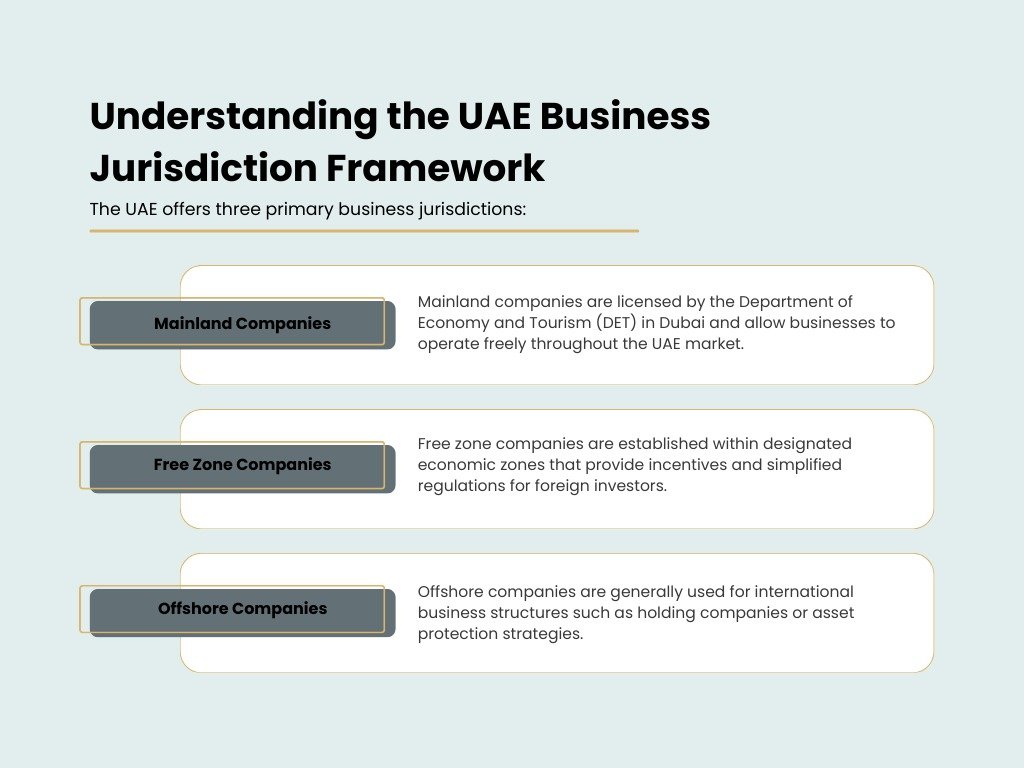
A Mainland Company is registered with the Dubai Department of Economy and Tourism. It allows businesses to operate freely throughout the UAE market. This structure is ideal for companies that need full market access within the country.
Historically, many Mainland businesses required a local Emirati partner. However, recent reforms introduced by the UAE government now allow 100% foreign ownership in many sectors, making Mainland companies more accessible for international investors.
Key Features of Mainland Companies:
- Access to the Entire UAE Market: Mainland companies can conduct business across the entire UAE, dealing with individuals, private companies, and government entities.
- Eligibility for Government Contracts: Mainland companies can participate in government tenders and large-scale infrastructure projects, which is particularly valuable for companies in construction, engineering, and consulting.
- Flexibility to Operate Anywhere in the UAE: Unlike Free Zone companies, Mainland companies can establish offices or branches anywhere in the UAE. This flexibility makes it easier to expand operations in the long run.
Opportunities for Unlimited Business Expansion: Mainland companies can open branches or retail outlets in different emirates, making them perfect for long-term growth.
What is a Free Zone Company?
A Free Zone Company is established within one of Dubai’s designated economic zones, specifically designed to attract foreign investment. With more than 30 Free Zones in Dubai, each catering to different industries like technology, media, logistics, and trade, these zones offer incentives to simplify business formation.
Key Features of Free Zone Companies:
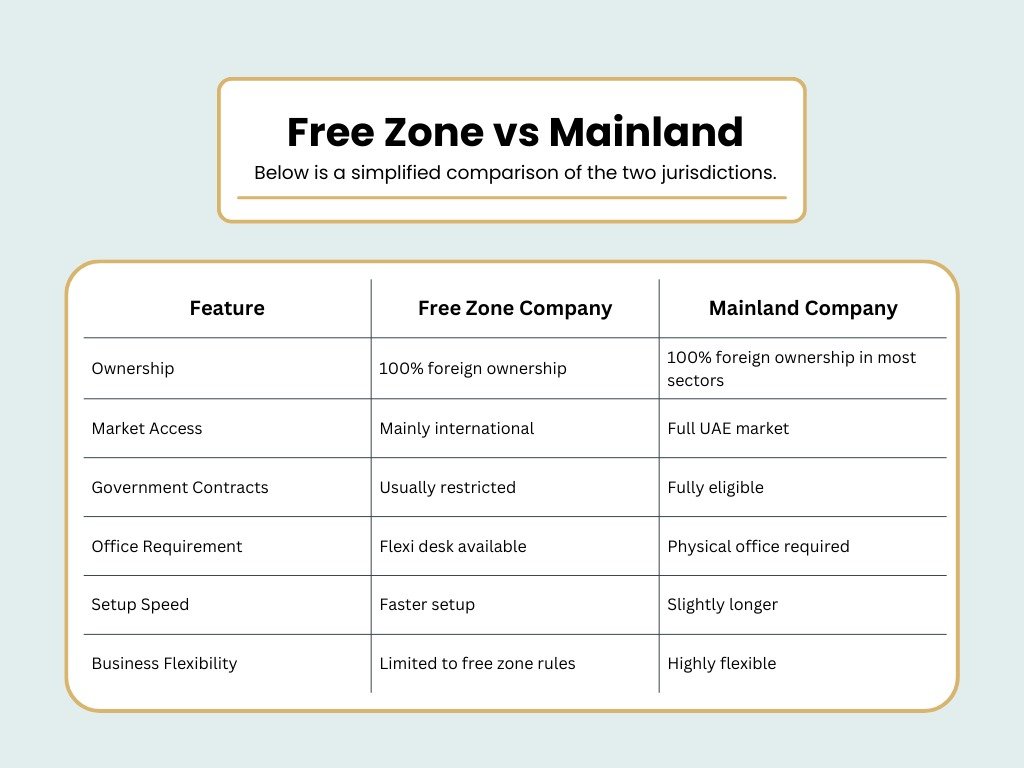
- 100% Foreign Ownership: One of the biggest advantages is that Free Zone companies allow 100% foreign ownership, eliminating the need for a local partner.
- Streamlined Company Formation: Setting up a Free Zone company is a quicker and simpler process. Many Free Zones can have businesses registered within just one to seven business days.
- Flexible Office Solutions: Free Zones offer various office solutions such as flexi desks, serviced offices, and shared workspaces. This is particularly useful for startups or businesses with minimal physical office requirements.
- Ideal for International Business: Free Zone companies are especially beneficial for businesses focused on international trade, consulting, technology, and digital services.
Major Free Zones in Dubai
Dubai is home to some of the world’s most advanced Free Zones, each with its own regulations, pricing structure, and industry focus. Popular Free Zones include:
- Dubai Multi Commodities Centre (DMCC)
- Dubai Airport Free Zone (DAFZA)
- Dubai Silicon Oasis
- Meydan Free Zone
- Dubai Internet City
- Dubai Media City
Each Free Zone has unique advantages, and choosing the right one depends on your industry and business needs.
Cost of Company Formation in Dubai
The cost of setting up a business in Dubai varies based on the type of company and the chosen jurisdiction. Here’s an overview of the typical costs:
Free Zone Company Setup Costs:
- AED 15,000 to AED 45,000: Includes trade license, company registration, office space, and basic visa eligibility.
Mainland Company Setup Costs:
- AED 40,000 to AED 70,000: Includes trade license, company registration, office lease, visa processing, and government approvals.
While Mainland companies generally cost more to set up, they offer broader access to the UAE market and more operational flexibility.
How to Choose the Right Structure for Your Business
The decision between Free Zone and Mainland company setup depends on several factors:
- Target Market: If your business targets customers in the UAE, a Mainland company might be more suitable. For international markets, a Free Zone company could be a better option.
- Business Type: Certain business activities, such as retail and hospitality, often require Mainland licensing. Consulting and tech services are commonly suited to Free Zone companies.
- Office Space Needs: Free Zone companies offer more flexible office solutions, whereas Mainland companies require physical office space under the Ejari system.
- Visa Requirements: Mainland companies need physical office space to allocate visas, while Free Zones may offer more flexible visa packages.
- Long-Term Expansion Plans: Mainland companies are ideal for businesses planning long-term expansion within the UAE. Free Zones are better suited for international operations.
Why Many Startups Choose Free Zones
Free Zone company formation is especially popular among startups due to its simplicity, lower cost, and quicker setup process. With bundled packages that include licenses, office space, and visa eligibility, entrepreneurs can launch their businesses without making significant financial commitments.
Why Established Businesses Prefer Mainland Companies
For businesses looking to serve local UAE customers or participate in government contracts, Mainland company formation is often the preferred choice. Mainland companies offer unrestricted access to the UAE market, making them ideal for long-term business growth within the country.
Practical Comparison and Decision-Making Guide
When deciding between Free Zone and Mainland, entrepreneurs must evaluate several practical factors, including:
- Total business setup cost
- Operational requirements
- Long-term growth plans
- Visa and office space needs
Real Business Scenarios: Free Zone vs Mainland
Let’s look at some practical examples to better understand which structure works best:
- Scenario 1: Consulting Firm: If you’re planning a consulting firm serving international clients, a Free Zone company is the best option. It offers lower setup costs and flexible office solutions.
- Scenario 2: Trading Business: If you’re opening a trading company that will operate in the UAE, a Mainland company is ideal for direct market access and government contracts.
- Scenario 3: Technology Startup: For a technology startup focused on software development, a Free Zone company offers the right environment with minimal setup costs and access to a supportive tech ecosystem.
Detailed Cost Comparison
Here’s a breakdown of the typical setup costs:
| Cost Element | Free Zone Company | Mainland Company |
| Trade License | AED 10k – 20k | AED 12k – 18k |
| Office Requirement | Flexi desks available | Physical office required |
| Visa Costs | AED 3.5k – 7k per visa | AED 3.5k – 7k per visa |
| Registration Fees | AED 5k – 10k | AED 8k – 15k |
| Total Setup Cost | AED 15k – 45k | AED 40k – 70k |
Key Decision Framework for Entrepreneurs
When deciding between Free Zone and Mainland, entrepreneurs should ask themselves the following key questions:
- Who are your target customers?
- What type of business activity are you conducting?
- Do you need office space?
- Do you plan to hire employees?
- What are your long-term expansion plans?
Answering these questions will help you make a decision that aligns with your goals.
Common Mistakes Entrepreneurs Make
Many entrepreneurs make the mistake of focusing solely on the lowest cost option without considering long-term goals. Other common mistakes include:
- Choosing the wrong business activity
- Ignoring banking and compliance requirements
- Underestimating long-term costs
Tax Considerations
With the introduction of corporate tax in 2023, businesses in the UAE now pay 9% tax on profits exceeding AED 375,000. Businesses earning below this threshold are exempt from tax. VAT applies at a standard rate of 5% for businesses with taxable turnover exceeding AED 375,000.
Frequently Asked Questions
1. Can a Free Zone Company Trade Directly with UAE Clients?
Free Zone companies cannot directly trade with local UAE clients without additional approval or a distributor. They are mainly intended for international trade.
2. What Types of Business Activities Are Restricted in Free Zones or Mainland?
Certain regulated activities, like legal, financial, or health services, may require special approvals or licenses, depending on the jurisdiction.
3. Can a Free Zone Company Lease Office Space Outside the Free Zone?
No, Free Zone companies are required to maintain their registered office within the Free Zone. A Mainland license is needed for offices outside.
4. Is There a Difference in Banking and Corporate Account Access Between Free Zone and Mainland?
Both setups can open corporate accounts, but Free Zone companies may face stricter banking requirements and higher minimum balances.
5. How Do Renewals and Compliance Requirements Differ Between Free Zone and Mainland Setup?
Free Zone renewals are simpler, while Mainland companies may need additional government approvals and tenancy renewals for compliance.
Final Thoughts
Choosing between a Free Zone or Mainland company depends on your business needs, market focus, and long-term goals. Free Zones offer a cost-effective and quick route for international businesses, while Mainland companies provide the flexibility to operate within the UAE market and access government contracts.
Dubai continues to be one of the most dynamic environments for entrepreneurs. With the right planning and professional advice, your business can thrive in this fast-growing market.