
Accounting & Compliance
Comprehensive accounting and compliance services for family offices and private clients, ensuring accurate financial reporting, regulatory adherence, and seamless coordination with governance and tax strategies.
At INCHUB, we deliver tailored accounting and compliance services designed to support family offices, private clients, and closely held enterprises with precision, clarity, and forward‑looking insight. Our approach goes beyond routine bookkeeping: we integrate robust financial reporting, regulatory adherence, and governance alignment to reduce risk, enhance transparency, and support strategic decision‑making. By combining deep technical expertise with an understanding of your broader objectives, we ensure compliance obligations are met efficiently while contributing to the long‑term resilience of your structures and operations.
Request a Quote
Comprehensive Accounting and Compliance Practices
for Effective Financial Management
Practical Topics With Strategic Depth
What Regulatory Reports Are Required in the UAE?
Overview of statutory reporting obligations, including annual financial statements, audit requirements (if applicable), and regulatory filings in mainland and free zones. Emphasize alignment with governance and compliance expectations.
Principles of Effective Accounting Governance
Explanation of internal controls, separation of duties, audit trails, and transparent reporting that support oversight, risk management, and long-term business continuity.
Compliance Tasks vs Compliance Strategy
Difference between ticking regulatory boxes and designing compliant structures that support governance, tax alignment, and strategic decision-making.
Typical Compliance Calendar for UAE Entities
List of periodic compliance events (VAT filings, annual returns, corporate tax filings, audit deadlines) with strategic notes on preparation and consequences of non-compliance.
Navigating Multi-Jurisdiction Compliance
Overview of how UAE reporting obligations interact with home jurisdiction reporting, CbCR, FATCA, or CRS, and why early alignment matters.
Accounting Data as a Strategic Asset
How accurate accounting feeds governance, forecasting, valuations, and investor confidence — not just compliance.
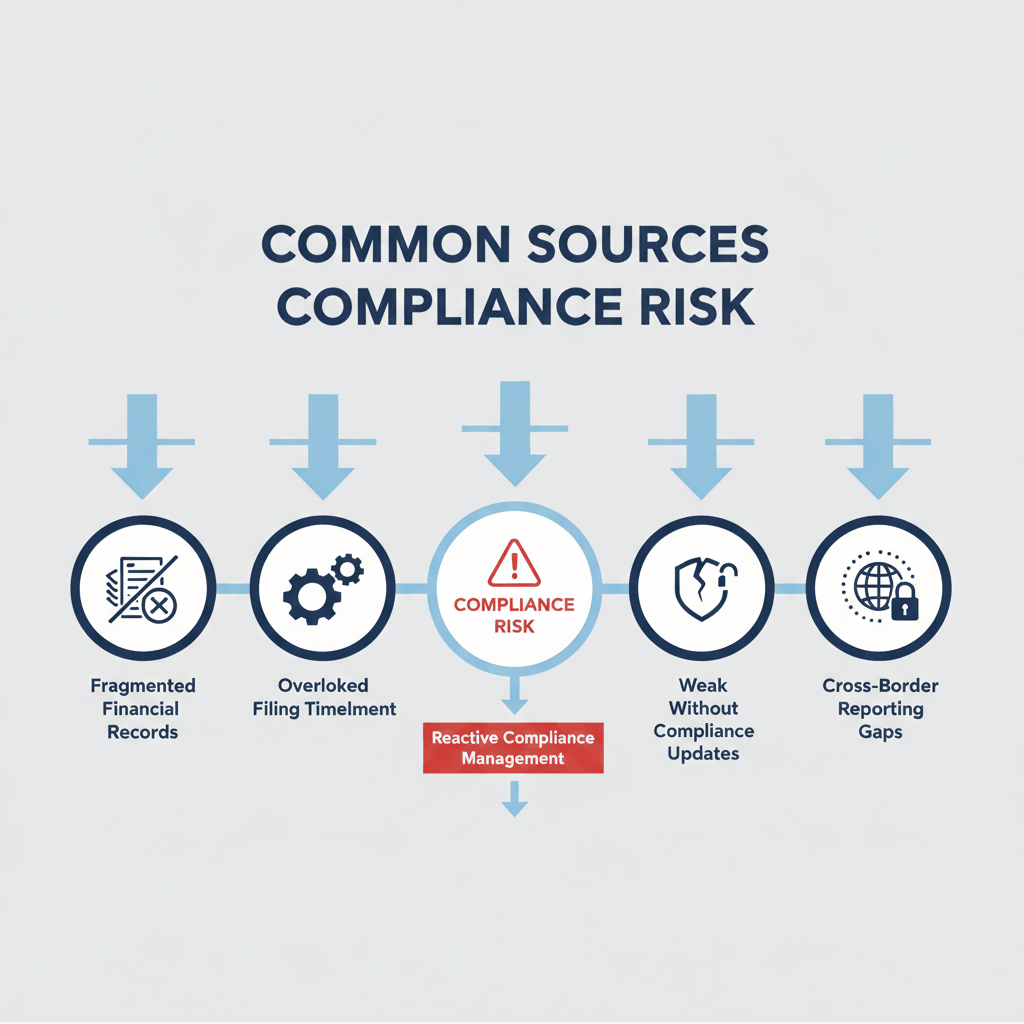
Common Triggers That Lead to Compliance Issues
Examples of risk drivers like delayed filings, inconsistent books, lack of documentation, or poor internal controls.
Our Approach to Accounting & Compliance
Process-agnostic explanation of how your team assists clients: coordinated planning, proactive reminders, tailored reporting, and governance alignment.