
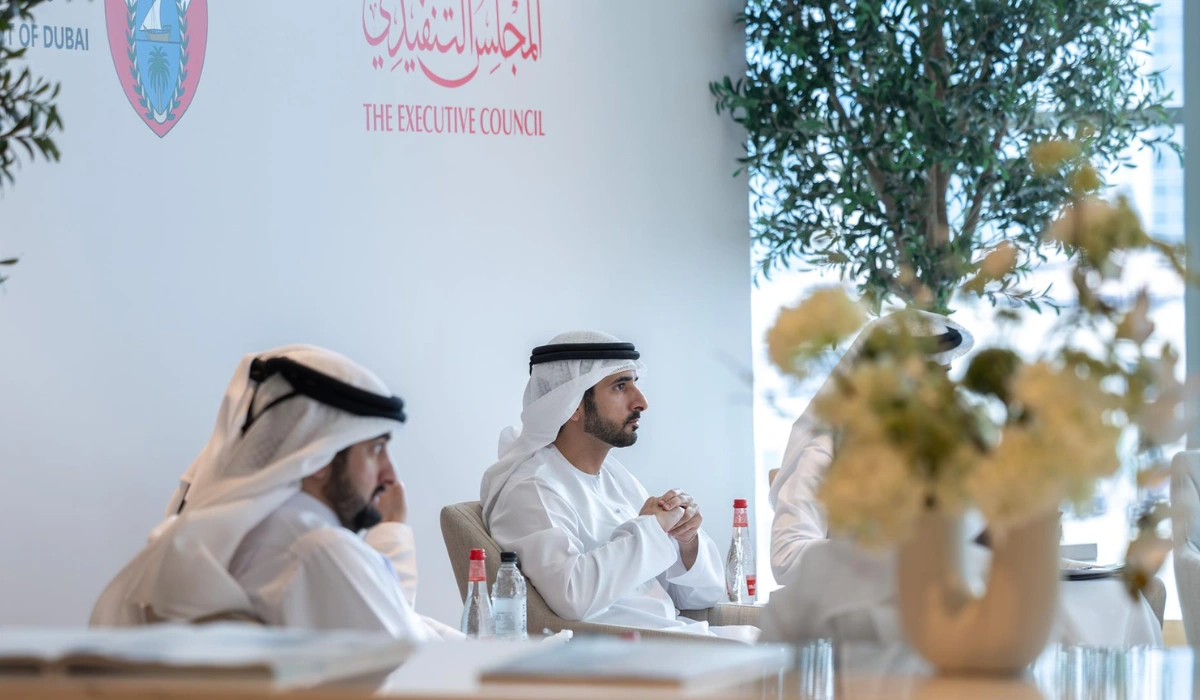
On 31 March 2026, Sheikh Hamdan bin Mohammed bin Rashid Al Maktoum, Crown Prince of Dubai, approved a landmark AED 1 billion economic support package for Dubai’s business community. Effective from 1 April 2026, the package runs for a period of three to six months and is structured as a direct, pre-emptive intervention to protect business liquidity at a time of elevated regional uncertainty.
This is not a crisis response. Dubai’s full-year GDP grew 5.4% in 2025, reaching AED 937 billion, with fourth-quarter growth accelerating to 6.4%. The stimulus is a calculated move by Dubai’s leadership to sustain that momentum, to ensure that short-term financial pressures do not erode the foundations of a business environment that has taken decades to build.
For founders, SME owners, free zone companies, and mainland businesses operating in Dubai, this package creates a time-limited but meaningful opportunity. The key is understanding exactly what is on offer, who qualifies, how to access it, and, critically, how to use it strategically rather than simply absorbing the relief into day-to-day spending.
This guide covers every element of the 2026 Dubai stimulus package in full, with practical steps for each measure, sector-specific breakdowns, and advisory commentary from the IncHub team.
Overview: What Is in the AED 1 Billion Package?
The stimulus is structured around five primary measures, each targeting a specific area of business operations. Taken together, they address the three most common pressure points for Dubai businesses during periods of uncertainty: cash flow, logistics, and talent access.
Government Fee Deferrals — 90 Days
Selected government fees are deferred for a period of three months. This covers trade licence renewals, registrations, and sector-specific administrative fees due between April and June 2026. The deferral applies to both mainland companies registered with the Department of Economy and Tourism (DET) and to companies operating within Dubai’s free zones, subject to individual zone confirmation.
The practical impact is immediate. A business due to pay AED 30,000 in licence renewal fees in April retains that capital in its working account until the deferral period ends. Across thousands of businesses, this mechanism effectively injects liquidity directly into Dubai’s private sector without requiring any new government expenditure.
Hospitality and Tourism Relief
Hotels, hotel apartments, and holiday homes across Dubai are permitted to postpone paying 100% of sales fees on room bookings and food and beverage, as well as the Tourism Dirham, for three months beginning 1 April 2026. This sector-specific relief targets one of Dubai’s most globally exposed industries, providing breathing room at a time when travel patterns have been disrupted by regional uncertainty.
Extended Customs Grace Periods
Dubai Customs has extended customs data submission grace periods from 30 to 90 days, with the possibility of further extension subject to full compliance with applicable tax legislation. For businesses involved in import, export, and re-export, this is operationally significant. It reduces storage pressure, allows more flexible inventory management, and eases the supply chain disruptions that affect trading and logistics companies most acutely.
Streamlined Residency Permits
The package includes streamlined processing for the issuance and renewal of UAE residency permits. Employment entry permits, mission visas, and dependent sponsorships are being processed within five working days through recognised corporate portals, compared to the standard fifteen-day timeline. This is a ten-day reduction that directly benefits companies with active hiring pipelines or employees at risk of visa lapses during an uncertain period.
Virtual Warehouses Initiative
The Executive Council approved a Virtual Warehouses Initiative managed by Dubai Customs. In its first phase, the initiative facilitates temporary imports of artwork into Dubai, exempting such imports from customs duties and financial guarantees. The initiative removes geographical restrictions, simplifies time extensions, and introduces virtual tracking for high-value assets. It signals a broader intent to position Dubai as a frictionless global hub for luxury goods, fine arts, and high-value trade.
Who Qualifies? Eligibility Across Business Types
Eligibility for the various measures differs depending on your company’s structure, location, and activity. The following table summarises the applicability of each measure.
|
Measure |
Mainland |
Free Zone |
Duration |
|---|---|---|---|
|
Fee Deferrals |
✓ DET |
✓ Zone-confirmed |
3 months |
|
Hospitality Relief |
✓ Hotels/Tourism |
✓ Tourism licensed |
3 months |
|
Customs Grace Period |
✓ Trading cos. |
✓ Trading cos. |
30→90 days |
|
Residency Streamlining |
✓ All employers |
✓ All employers |
Ongoing |
|
Virtual Warehouses |
✓ Art/luxury import |
✓ Art/luxury import |
Phase 1 pilot |
How to Access the Package: Step-by-Step
The relief measures are not automatic in all cases. Taking full advantage requires a proactive approach across three areas: government, banking, and internal financial planning.
Sector-Specific Implications
SMEs and Startups
Small and medium enterprises are the primary beneficiaries of this package. As economist Dr Nasser Saidi noted publicly, SMEs are the businesses most sensitive to demand shocks and liquidity crunches. For early-stage startups, every dirham retained in working capital during Q2 2026 is a dirham available for product development, team retention, or customer acquisition. The streamlined residency processing is particularly valuable for startups with imminent key hires.
Trading and Logistics Companies
The 90-day customs grace period is the single most valuable measure for trading entities. Managing inventory across a 90-day declaration window instead of 30 days fundamentally changes supply chain economics. Combined with the fee deferrals on trade licences, this package offers meaningful cost relief to the import-export community that forms the backbone of Dubai’s non-oil economy.
Free Zone Companies
Free zone businesses should note that deferral eligibility requires direct confirmation from the relevant zone authority. DMCC, DIFC, Dubai South, and JAFZA have each confirmed participation, but processes and documentation requirements vary. IncHub recommends engaging your zone administrator proactively and in writing to confirm the specific deferrals available to your entity.
Hospitality and Tourism Operators
Hotels and tourism businesses face the most direct cash flow pressure in the current environment. The three-month deferral on 100% of sales fees and the Tourism Dirham provides critical breathing room. Operators should combine this relief with the broader government fee deferrals and, where applicable, engage directly with the Dubai Department of Economy and Tourism for sector-specific guidance.
The Broader Context: Why This Package Matters Beyond the Numbers
The AED 1 billion stimulus is not simply a financial intervention. It is a statement of intent from Dubai’s leadership about the kind of business environment the emirate intends to maintain. Several features of the package are notable for what they signal to the international investor community.
First, the speed of implementation. Approved on 31 March 2026 and effective from 1 April 2026, the package was deployed within 24 hours of announcement. This demonstrates the agility that distinguishes Dubai’s regulatory environment from more cumbersome jurisdictions.
Second, the scope. By targeting both mainland and free zone businesses, and by spanning hospitality, trade, logistics, talent, and luxury assets in a single package, Dubai’s leadership has signalled a systemic rather than sector-specific response. This breadth of coverage is important for institutional investors who assess political risk and policy coherence as part of their location decisions.
Third, the complementarity with the UAE Central Bank’s Resilience Package. While the federal Central Bank provides monetary stability and credit availability, Dubai’s fiscal package addresses operational friction at the company level. The two operate in parallel, covering both macro and micro dimensions of economic resilience. Dr Saidi described this as ‘a prime example of pro-active government policies and well-structured economic stress management.’
Dubai South: An Additional Layer of SME Support
For companies operating within Dubai South’s Business Park, the main stimulus package is supplemented by a further layer of localised relief. This includes rent-free incentives tied to contract renewals, flexible payment deferrals beyond the standard package, a waiver of minor administrative penalties, and a commitment to maintain current rental rates for eligible renewals throughout the relief period. SMEs at Dubai South should engage directly with the Business Park administration to confirm eligibility and access the full range of benefits available.
FAQ: Dubai AED 1 Billion Stimulus 2026
Does the deferral apply to new business licences as well as renewals?
Yes. The fee deferral covers both new licence applications and renewals, making it equally accessible to businesses establishing operations in Dubai during the relief period and those renewing existing licences.
Are free zone companies automatically included?
No. Free zone companies must contact their specific zone administrator to confirm eligibility and initiate the deferral process. Participation has been confirmed by major zones including DMCC, DIFC, Dubai South, and JAFZA, but processes differ by zone.
What happens to deferred fees at the end of the three-month period?
Deferred fees become payable at the end of the deferral window. Authorities may review and extend the period, but businesses should plan on the basis that the full deferred amount will be due in Q3 2026. Building a dedicated repayment reserve during Q2 is strongly advised.
Can deferred fees be spread over multiple payments in Q3?
This depends on the specific authority. DET and some free zone authorities have indicated flexibility in repayment scheduling. Businesses should confirm the repayment terms in writing with their respective authority at the time of deferral application.
Does the stimulus affect corporate tax obligations?
No. The stimulus package addresses operating costs and government fees. Corporate tax obligations, including the 9% UAE Corporate Tax and the Domestic Minimum Top-up Tax introduced in 2026, are administered by the Federal Tax Authority and remain unaffected by the stimulus measures.
How does IncHub assist with stimulus access?
IncHub provides end-to-end support for businesses navigating the deferral process, including eligibility assessment, authority engagement, documentation, and strategic cash flow planning. We also coordinate banking relationships where complementary bank relief is available. Contact our team at inchub.ae for a complimentary review of your stimulus access position.
Sources:
Dubai Media Office — AED 1 Billion Economic Incentives Announcement (March 2026)
Gulf News — Dubai Stimulus: What It Means for Companies and Jobs (April 2026)
Gulf News — Dubai’s Timely Stimulus Sends Strong Signal (April 2026)
Gulf News — Fee Deferrals Under New Economic Measures (April 2026)
Dubai Executive Council — AED 1 Billion Relief Package Summary
Fast Company Middle East — Dubai’s $272M Stimulus Analysis (April 2026)
Fast Company Middle East — Dubai Stimulus & Growth Strategy (March–April 2026)