
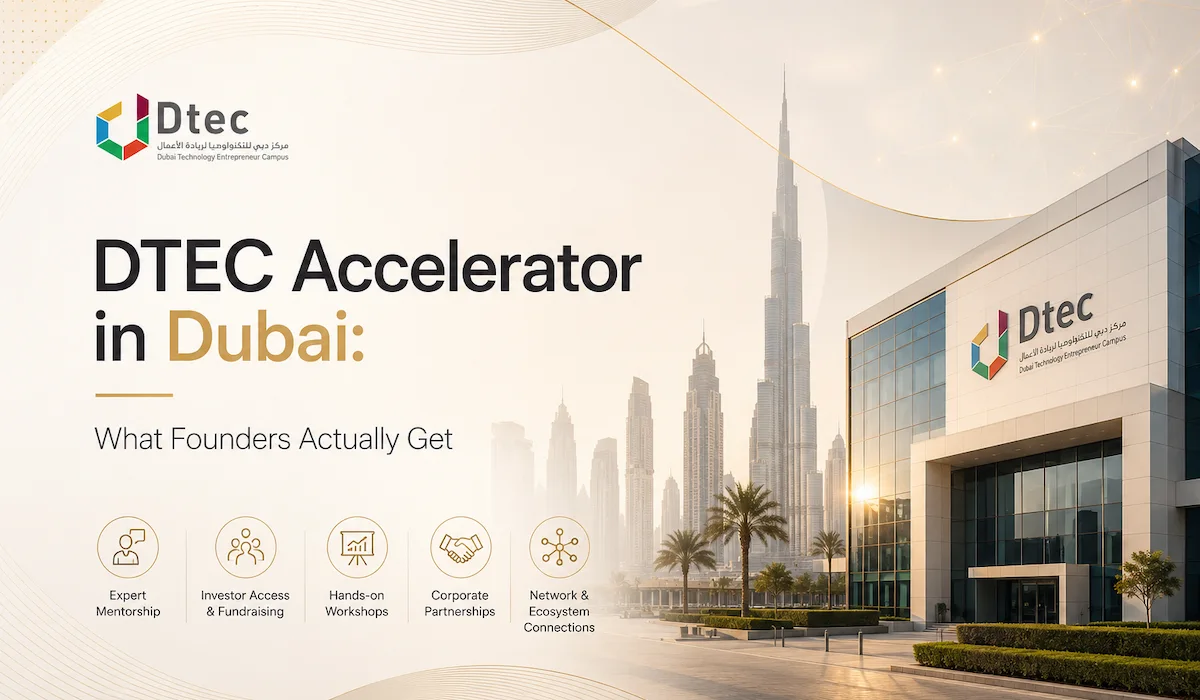
Why the DTEC Accelerator Stands Out in Dubai
Dubai has become one of the leading startup hubs in the Middle East, especially for technology companies. While many free zones offer business licensing and office space, DTEC differentiates itself by creating an ecosystem built specifically for startup growth.
The accelerator programme is one of the biggest reasons founders choose DTEC over a standard business setup option. Instead of simply offering registration services, the campus provides direct exposure to investors, mentors, and large corporate partners.
For startups entering the UAE market, this ecosystem can significantly reduce the time needed to build industry connections and gain market visibility.
What Founders Actually Get in the DTEC Accelerator
Most DTEC accelerator programmes follow a structured cohort model. These programmes usually run for around eight to twelve weeks and focus on helping startups prepare for growth, fundraising, and market expansion.
Mentorship From Experienced Startup Operators
One of the strongest parts of the programme is founder mentorship. Participants typically work with experienced entrepreneurs, investors, and industry specialists who understand both regional and international startup markets.
Mentors often help founders with:
This practical guidance can help startups avoid common mistakes during the early growth stage.
Workshops Focused on Real Startup Challenges
The programme usually includes workshops designed around real operational needs rather than theoretical business training.
Common workshop topics include:
These sessions are particularly valuable for first-time founders who may not yet have experience raising capital or entering regional markets.
Investor Access and Fundraising Opportunities
For many startups, investor access is one of the main reasons to join an accelerator programme.
DTEC participants may receive introductions to:
Many programmes conclude with a demo day where startups pitch directly to investors, media representatives, and potential business partners.
In Dubai’s competitive startup environment, warm introductions can often create opportunities that are difficult to access independently.
Corporate Partnerships Available Through DTEC
Another major advantage of the DTEC ecosystem is access to corporate partners and technology providers.
The campus has connections with global technology companies including:
Depending on the programme, startups may receive:
For SaaS, AI, fintech, and enterprise startups, these partnerships can create significant early-stage advantages.
Who Should Apply to the DTEC Accelerator Dubai ?
The programme is generally best suited for startups that already have some level of validation.
Ideal applicants usually include:
The accelerator is less suitable for founders who only have a raw business idea without product development or market testing.
What Industries Does DTEC Focus On?
DTEC primarily supports technology-driven businesses aligned with Dubai’s innovation ecosystem.
Common sectors include:
Dubai continues to invest heavily in digital transformation, making these industries highly relevant for long-term regional growth.
The Real Value Beyond Workshops and Pitching
Many founders initially join accelerators expecting training sessions and investor meetings. In reality, the long-term value often comes from the community itself.
Being surrounded by other startup founders creates an environment where companies can:
The peer network formed during accelerator programmes often continues well after the cohort ends.
For international founders entering Dubai for the first time, this network can become one of the most valuable business assets they gain from the programme.
Is the DTEC Accelerator Worth It for UAE Startups?
For startups looking to grow within the UAE and MENA region, the DTEC accelerator can provide meaningful strategic advantages.
The programme combines:
While acceptance is competitive, startups that already show traction or product validation are more likely to benefit from the programme structure.
Compared to general-purpose free zones, DTEC offers a more startup-focused environment designed around technology business growth rather than only company formation.
Frequently Asked Questions
Do I need to be registered at DTEC to join the accelerator?
Being registered at DTEC is not always a strict requirement for applying to the accelerator, but registered companies have the greatest proximity to and awareness of programme openings. Contact DTEC directly for the current application requirements.
Is there an equity component to the DTEC accelerator?
Some accelerator programmes take a small equity stake in participating companies. Whether DTEC’s current programmes involve equity participation should be confirmed directly with DTEC.
How often does the accelerator run?
DTEC runs multiple programmes across the year. The frequency and format depend on the specific programme type. Check the DTEC website or contact the campus directly for current cohort schedules
Can a company apply to the accelerator after it is already established and profitable?
Yes. The accelerator is relevant at different stages. A more established company may find specific programmes, such as scale-up or corporate partnership tracks, more applicable than the early-stage cohort.