
THE DIRECT ANSWER
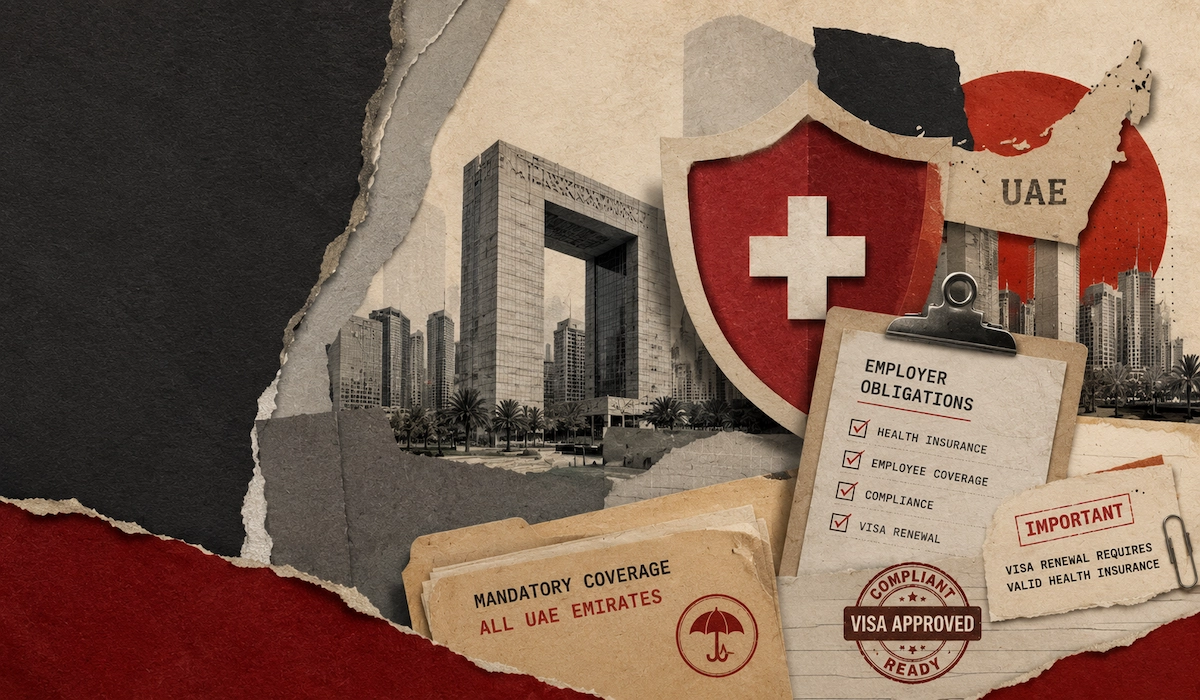
UAE mandatory health insurance is compulsory for every private-sector employee across all seven emirates in 2026. Employers must provide and pay for compliant health insurance coverage for sponsored employees. The most significant consequence of non-compliance is not the fine. A residence visa cannot be issued or renewed without valid health insurance. If a policy lapses, visa processing can be blocked until compliant coverage is restored, creating immigration, operational, and workforce disruptions for the employer.
KEY POINTS
Is Health Insurance Mandatory in the UAE for Employees?
Yes.
UAE mandatory health insurance rules require every private-sector employer to provide compliant health insurance for employees sponsored under the company. Since the nationwide expansion took effect on 1 January 2025, the requirement applies across Dubai, Abu Dhabi, Sharjah, Ajman, Umm Al Quwain, Ras Al Khaimah, and Fujairah.
Employers cannot legally transfer insurance costs to employees through salary deductions. Maintaining active coverage is also essential for visa processing because residence visas cannot be issued or renewed without compliant health insurance.
For businesses operating in the UAE, health insurance is no longer simply an employee benefit. It is a mandatory immigration and compliance requirement directly linked to workforce sponsorship.
How UAE Mandatory Health Insurance Expanded Nationwide
The UAE’s mandatory health insurance framework was introduced gradually rather than through a single nationwide law.
| Year | Development |
|---|---|
| 2006 | Abu Dhabi introduced mandatory health insurance requirements. |
| 2014 | Dubai implemented mandatory employer-sponsored health insurance. |
| 2025 | Sharjah, Ajman, Umm Al Quwain, Ras Al Khaimah, and Fujairah became subject to mandatory health insurance requirements. |
| 2026 | First full year of nationwide implementation across all seven emirates. |
Many employers are familiar with the long-standing requirements in Dubai and Abu Dhabi but remain unaware that the Northern Emirates are now fully integrated into the mandatory health insurance framework.
Who Is Responsible for UAE Health Insurance?
One of the most common compliance questions is understanding who bears responsibility for obtaining and maintaining health insurance coverage.
| Party | Responsibility |
|---|---|
| Employer | Provide and pay for health insurance for sponsored employees. |
| Employee | Supply documentation and dependent information where required. |
| Individual Sponsor | Arrange health insurance for sponsored family members and domestic workers. |
| Company Owner or Founder | Maintain compliant health insurance for self-sponsored residence visas. |
| Domestic Worker Sponsor | Ensure active insurance coverage throughout sponsorship. |
As a general principle, responsibility follows sponsorship. The person or entity sponsoring the visa is typically responsible for ensuring compliant health insurance is maintained.
UAE Health Insurance Requirements by Emirate
Although health insurance is mandatory nationwide, regulatory oversight differs by emirate.
Employer Obligations at a Glance
| Requirement | Dubai | Abu Dhabi | Northern Emirates |
|---|---|---|---|
| Health insurance mandatory | Yes | Yes | Yes |
| Employer pays premium | Yes | Yes | Yes |
| Visa renewal linked to insurance | Yes | Yes | Yes |
| Minimum annual coverage | AED 150,000 | AED 150,000 | AED 150,000 |
| Dependent coverage mandatory | No | Spouse + up to 3 children | Generally No |
Regulatory Framework
The UAE health insurance system is administered through three primary regulatory authorities:
Coverage Requirements by Emirate
| Emirate | Regulator | Minimum Coverage | Dependent Requirement | Basic Plan Cost 2026 |
|---|---|---|---|---|
| Dubai | DHA | AED 150,000 annual benefit limit | Employee only | AED 600–750 per employee annually |
| Abu Dhabi | DoH | AED 150,000 annual benefit limit | Employee, spouse, and up to three children under 18 | AED 700–1,200 per employee annually |
| Sharjah, Ajman, UAQ, RAK and Fujairah | MOHAP | AED 150,000 annual benefit limit | Employee only in most sectors | AED 320–600 per employee annually |
Health Insurance Requirements for Free Zone Companies
A common misconception is that free zone companies operate under different health insurance rules.
They do not.
Whether your company is established in DMCC, IFZA, RAKEZ, Meydan Free Zone, SHAMS, SPC Free Zone, Dubai South, JAFZA, DAFZA, ADGM, Masdar City, Fujairah Creative City, or another UAE free zone, mandatory health insurance obligations still apply to sponsored employees.
Free zone registration may affect licensing requirements, office requirements, immigration procedures, and business regulations, but it does not remove the obligation to provide compliant health insurance.
Employers operating in free zones should ensure:
When Should Health Insurance Be Arranged During Company Formation?
Many founders assume health insurance can be arranged after a residence visa is issued.
In practice, health insurance should be integrated into the immigration process from the beginning.
A typical company formation and immigration sequence is:
Leaving insurance until the final stage often causes avoidable delays and administrative complications.
The Visa Consequence Nobody Mentions
Most discussions focus on fines. The more immediate risk is visa disruption.
When an employee’s residence visa reaches renewal, authorities verify that health insurance coverage remains active and compliant. If the policy has expired or does not satisfy minimum requirements, the visa renewal process can be delayed or blocked until coverage is restored.
For businesses with multiple employees, missed insurance renewals frequently create operational problems. A company often discovers the issue only when attempting to process a visa renewal.
COMPLIANCE TIP
Maintain a shared compliance calendar that tracks:
Setting alerts at least 60 days before expiry significantly reduces the risk of visa processing interruptions.
What Happens If Health Insurance Expires?
An expired health insurance policy can create problems long before regulators impose a financial penalty.
Potential consequences include:
The most common scenario occurs when an employee reaches visa renewal and the company discovers the insurance policy expired weeks or months earlier.
This is why insurance renewal dates should be monitored alongside visa expiry dates and work permit renewals.
UAE Health Insurance Cost for Employers in 2026
The cost of UAE mandatory health insurance depends on:
Typical Employer Costs
| Company Size | Insurance Type | Approximate Annual Cost |
|---|---|---|
| 1–5 employees | Individual or small group plans | AED 600–2,500 per employee |
| 6–20 employees | Group plan | AED 400–1,800 per employee |
| 21–100 employees | Group plan with risk pooling | AED 300–1,500 per employee |
| 100+ employees | Large corporate plan | Often AED 250–1,200 per employee |
Group plans generally become more cost-effective as employee numbers increase because insurers spread risk across a larger workforce.
Individual Policy vs Group Policy
Employers often ask whether they should purchase individual plans or a group medical insurance policy.
| Feature | Individual Policy | Group Policy |
|---|---|---|
| Cost per employee | Usually higher | Usually lower |
| Administration | Multiple renewals | Single renewal cycle |
| Employee management | Separate records | Centralised management |
| Scalability | Limited | Highly scalable |
| Best suited for | Sole founders and very small businesses | Businesses with multiple employees |
Even companies with only a few employees may qualify for group pricing and simplified administration.
What Does the Dubai Essential Benefits Plan Cover?
For Dubai employees earning AED 4,000 per month or less, the DHA Essential Benefits Plan represents the mandatory minimum standard.
Coverage typically includes:
The plan generally excludes:
Employees earning above AED 4,000 monthly must still receive insurance that meets DHA minimum standards.
Documents Required for UAE Employee Health Insurance
Insurance providers may request slightly different information, but employers commonly need:
Preparing documentation in advance typically speeds up policy issuance and employee onboarding.
Health Insurance for Founders, Investors and Business Owners
Many entrepreneurs assume mandatory health insurance applies only to employees.
This is incorrect.
Founders and directors sponsoring their own residence visas through a UAE company must maintain compliant health insurance coverage. This applies whether the individual is a shareholder, managing director, investor visa holder, or sole business owner.
Failure to maintain coverage can affect future visa renewals in exactly the same way as employee visa renewals.
Domestic Workers and Dependent Sponsorship
Health insurance obligations extend beyond corporate employees.
Domestic Workers
Sponsors must provide compliant health insurance for:
Family Dependents
Rules differ by emirate.
Abu Dhabi
Employers must generally cover the employee, spouse, and up to three children under 18.
Dubai and Northern Emirates
Employers generally cover only the employee. Dependents are typically insured by the individual sponsor.
UAE Health Insurance Non-Compliance Penalties
Failure to provide mandatory health insurance can result in:
While financial penalties vary by regulator and circumstances, businesses often find the operational consequences more disruptive than the monetary fines themselves.
Common Health Insurance Compliance Mistakes
Many compliance failures arise from operational oversights rather than intentional violations.
The most common mistakes include:
Regular compliance reviews help prevent these issues from escalating into visa or operational problems.
UAE Health Insurance Compliance Calendar
The most effective way to avoid compliance problems is to maintain a structured review schedule.
| Compliance Item | Review Frequency |
|---|---|
| Health insurance policies | Monthly |
| Residence visa expiry dates | Monthly |
| Work permits | Monthly |
| Establishment card validity | Quarterly |
| Employee records | Quarterly |
| Dependent coverage review | Annually |
| Insurance renewal planning | 60–90 days before expiry |
Businesses that track these deadlines centrally experience significantly fewer immigration and renewal disruptions.
UAE Health Insurance Compliance Checklist for Employers
UAE Health Insurance Laws and Regulatory Authorities
The UAE mandatory health insurance framework is administered through multiple authorities and regulatory frameworks.
Key regulatory bodies include:
Employers should monitor regulatory updates from the authority governing the emirate in which their employees are sponsored.
Frequently Asked Questions
Do I need health insurance before applying for an employee visa?
Can I renew a UAE residence visa without health insurance?
Can employers deduct health insurance costs from salaries?
Is health insurance required throughout the UAE?
Is health insurance mandatory for company owners?
Is health insurance mandatory for domestic workers?
Does an employee’s spouse’s insurance satisfy the employer’s obligation?
Does Abu Dhabi require dependent coverage?
Are freelancers covered by employer health insurance rules?
Are free zone companies exempt from mandatory health insurance?
How can businesses stay compliant?
Need Help with UAE Health Insurance Compliance?
IncHub helps businesses across all seven emirates stay compliant with mandatory health insurance, employee visas, and renewal obligations.
Book a Free Consultation