
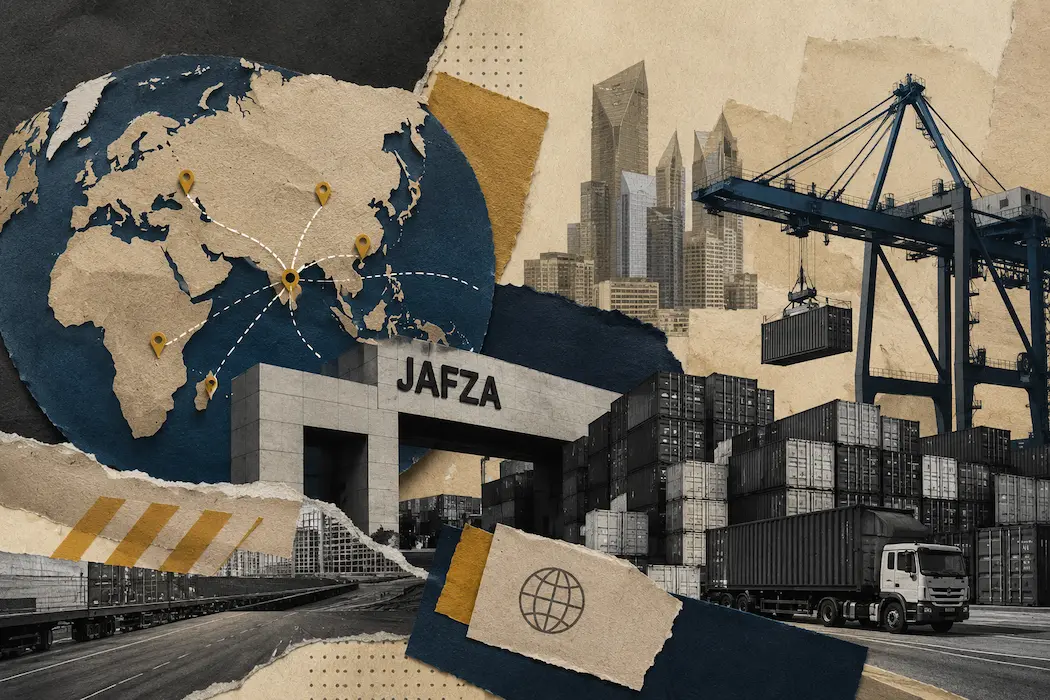
Global supply chains are evolving at a rapid pace. Rising transportation costs, geopolitical uncertainty, changing customer expectations, and the need for faster delivery have encouraged businesses to rethink how they manage inventory and serve international markets. Rather than shipping products from a single manufacturing location to multiple countries, many multinational companies are establishing regional distribution hubs that allow them to store inventory closer to customers, reduce lead times, and improve supply chain resilience.
The Middle East has emerged as one of the world’s most strategic locations for regional distribution, connecting Europe, Asia, and Africa through world-class transport infrastructure and international trade networks. Within this ecosystem, the Jebel Ali Free Zone (JAFZA) has established itself as one of the leading destinations for importers, exporters, manufacturers, and logistics companies seeking to build efficient regional operations.
Located alongside Jebel Ali Port and connected to an extensive logistics network, JAFZA offers businesses direct access to one of the world’s busiest container ports, modern warehousing solutions, streamlined customs procedures, and a business-friendly regulatory environment. These advantages enable companies to consolidate inventory, optimise distribution, and expand into high-growth markets across the Gulf Cooperation Council (GCC), the Middle East, Africa, and South Asia.
However, choosing a regional distribution hub is about far more than selecting a warehouse location. Businesses must evaluate connectivity, operational efficiency, scalability, customs processes, infrastructure, and long-term growth opportunities. A strategically located distribution centre can significantly improve customer service while reducing transportation costs and operational complexity.
This article explores why global importers are increasingly choosing JAFZA for their regional distribution hubs, the industries driving demand, and how businesses can leverage Dubai’s logistics ecosystem to strengthen their international supply chains.
Why Regional Distribution Hubs Have Become a Strategic Priority
International trade has changed significantly over the past decade. Businesses are no longer focused solely on manufacturing efficiency. Today, the ability to move products quickly, respond to market demand, and minimise supply chain disruptions has become a key competitive advantage.
A regional distribution hub acts as a central location where products are received, stored, managed, and redistributed to multiple countries. Instead of maintaining separate inventories in every market, businesses can consolidate stock within a strategically located facility and distribute products efficiently based on customer demand.
This model provides several operational benefits.
Faster Market Access
Customers increasingly expect shorter delivery times, whether they are retailers ordering bulk inventory or consumers purchasing products online. A regional distribution hub allows businesses to deliver goods more quickly by positioning inventory closer to target markets.
For companies serving the GCC, Africa, and South Asia, Dubai provides an ideal location that reduces transit times while supporting faster order fulfilment.
Improved Supply Chain Resilience
Recent global disruptions have demonstrated the importance of building resilient supply chains. Businesses are moving away from highly concentrated logistics models and instead creating regional hubs that reduce dependency on a single location.
A diversified distribution strategy enables organisations to respond more effectively to unexpected events, minimise operational risks, and maintain business continuity.
Better Inventory Management
Managing inventory across multiple countries often results in higher storage costs and inefficient stock allocation. Regional distribution hubs enable businesses to centralise inventory while improving visibility across their supply chains.
This approach helps companies:
- Reduce excess inventory
- Improve stock accuracy
- Respond faster to demand fluctuations
- Optimise warehouse utilisation
- Lower inventory carrying costs
Lower Logistics Costs
Consolidating inventory into a central distribution facility often reduces transportation expenses by enabling larger shipment volumes and more efficient routing. Businesses can also streamline customs processes and minimise unnecessary handling between multiple locations.
For companies operating across diverse regional markets, these efficiencies contribute to significant long-term cost savings.
Why Dubai Has Become a Global Logistics Gateway
Dubai has developed into one of the world’s most important international trade centres. Its strategic location between Europe, Asia, and Africa allows businesses to reach billions of consumers through well-established shipping and aviation networks.
Rather than serving only the domestic UAE market, Dubai functions as a gateway for regional and international trade. This position has attracted multinational corporations, manufacturers, distributors, and trading companies seeking a central base for expanding across multiple markets.
Several factors contribute to Dubai’s growing importance as a logistics hub.
Strategic Geographic Position
Dubai sits at the crossroads of major global trade routes, making it an ideal location for businesses that import products from Asia, manufacture goods internationally, and distribute them throughout the Middle East, Africa, and Europe.
For many organisations, this strategic location reduces transit times while providing greater flexibility when serving diverse regional markets.
World-Class Transport Infrastructure
Efficient logistics depend on reliable infrastructure. Dubai has invested heavily in developing integrated transport networks that connect sea, air, and land freight services.
Businesses benefit from:
- Modern container terminals
- Extensive road networks
- International airports
- Integrated freight services
- Advanced logistics facilities
These capabilities allow companies to move goods efficiently across international markets while maintaining greater control over their supply chains.
Growing Regional Consumer Markets
The GCC, Africa, and South Asia continue to experience significant economic growth, urbanisation, and rising consumer demand. These expanding markets present attractive opportunities for manufacturers and distributors seeking long-term growth.
Establishing a regional distribution hub in Dubai enables businesses to respond more quickly to changing market conditions while supporting future expansion.
Government Support for Trade
The UAE has consistently introduced policies that encourage international investment, trade, and business growth. Its commitment to improving logistics infrastructure, customs efficiency, and economic diversification has strengthened Dubai’s position as a preferred destination for multinational businesses.
For companies seeking long-term regional operations, this stable business environment provides greater confidence when making strategic investments.
Why JAFZA Stands Out as a Regional Distribution Hub
While Dubai offers numerous logistics advantages, JAFZA provides a purpose-built ecosystem designed specifically to support international trade, manufacturing, warehousing, and distribution.
Since its establishment, JAFZA has evolved into one of the world’s leading free zones, bringing together businesses from diverse industries within an integrated commercial environment.
Its combination of infrastructure, connectivity, and operational flexibility makes it particularly attractive for companies managing regional distribution networks.
Direct Access to Jebel Ali Port
One of JAFZA’s greatest advantages is its direct integration with Jebel Ali Port, one of the largest and busiest container ports in the region.
This proximity enables businesses to:
- Reduce cargo handling times
- Improve import and export efficiency
- Accelerate customs clearance
- Simplify international shipping operations
- Lower inland transportation costs
For importers moving large shipment volumes, direct port access can significantly improve operational efficiency.
Seamless Multimodal Connectivity
Modern supply chains depend on the ability to move goods through multiple transport modes without unnecessary delays.
JAFZA supports seamless multimodal logistics through connections between:
- Sea freight
- Air freight
- Road transport
- Regional distribution networks
This flexibility enables businesses to select the most appropriate transportation method based on delivery requirements, product characteristics, and market priorities.
Flexible Warehousing Solutions
Every business has unique storage and operational requirements. Some organisations require standard warehouse facilities, while others need specialised infrastructure for temperature-sensitive products, industrial equipment, or large-scale inventory management.
JAFZA offers a range of warehousing solutions that can accommodate businesses at different stages of growth.
These include:
- Ready-built warehouses
- Custom-built distribution facilities
- Industrial units
- Logistics parks
- Storage facilities designed for specialised industries
This flexibility enables businesses to scale operations without relocating to new facilities as demand increases.
Integrated Business Ecosystem
Beyond physical infrastructure, JAFZA provides access to an established network of logistics providers, freight forwarders, customs brokers, shipping companies, financial institutions, and professional service providers.
Operating within this ecosystem allows businesses to coordinate multiple aspects of their supply chain more efficiently while benefiting from proximity to trusted logistics partners. Rather than managing fragmented service providers across different locations, companies can centralise operations within a single integrated business environment.
The Business Advantages of Choosing JAFZA for Regional Distribution
A successful regional distribution hub is built on more than warehouse space. It requires seamless connectivity, efficient logistics, streamlined customs processes, and the ability to scale as markets evolve. JAFZA brings these elements together within a single business ecosystem, enabling companies to optimise their regional supply chains while supporting long-term growth.
Access to Multiple High-Growth Markets
One of JAFZA’s greatest strengths is its ability to serve several regions from a single operational base. Businesses can efficiently distribute products to the GCC, the wider Middle East, Africa, South Asia, and selected European markets without maintaining separate warehousing operations in each country.
This centralised approach reduces operational complexity while allowing businesses to respond more quickly to customer demand across multiple markets.
For multinational companies, the ability to manage inventory from one strategic location also simplifies forecasting, procurement, and stock replenishment.
Improved Inventory Visibility
Modern supply chains rely heavily on accurate inventory management. Fragmented storage across different countries often results in duplicate stock, inconsistent reporting, and unnecessary carrying costs.
By consolidating inventory within JAFZA, businesses gain greater visibility into stock levels and product movement. This enables more informed purchasing decisions, reduces excess inventory, and helps maintain optimal stock availability across regional markets.
For industries with seasonal demand or rapidly changing product cycles, better inventory visibility translates into improved operational efficiency and customer satisfaction.
Faster Order Fulfilment
Customer expectations continue to evolve, with businesses and consumers alike demanding shorter delivery times. A strategically located regional distribution hub enables companies to process and dispatch orders more quickly than relying solely on international shipments from manufacturing locations.
This can significantly improve service levels for distributors, wholesalers, retailers, and e-commerce businesses operating across the Middle East and neighbouring regions.
Operational Scalability
Business expansion often requires additional warehouse capacity, larger operational facilities, or enhanced logistics capabilities. Relocating distribution centres can be both costly and disruptive.
JAFZA provides businesses with the flexibility to expand within an established logistics ecosystem. Companies can increase storage capacity, establish specialised facilities, or support growing regional demand without fundamentally changing their operational model. This scalability makes JAFZA suitable for both growing businesses and multinational enterprises planning long-term regional expansion.
Industries Driving Demand for Regional Distribution Hubs
Almost every industry involved in international trade can benefit from a strategically located distribution hub. However, several sectors are increasingly choosing JAFZA due to the specific logistics requirements of their products and customers.
Consumer Goods and FMCG
Fast-moving consumer goods require efficient inventory management and rapid replenishment. Retailers depend on consistent product availability, while manufacturers need responsive supply chains capable of supporting changing consumer demand.
By operating from JAFZA, FMCG companies can distribute products efficiently across multiple regional markets while maintaining centralised inventory control.
Electronics and Technology
Electronics manufacturers often manage large product portfolios with frequent product launches and changing inventory requirements. Regional distribution hubs enable companies to introduce new products more efficiently while reducing shipping times and maintaining stock availability.
The ability to consolidate inventory before regional distribution also improves operational flexibility and reduces overall logistics costs.
Healthcare and Medical Devices
Healthcare products require reliable supply chains and dependable distribution networks. Hospitals, pharmacies, and healthcare providers depend on timely product availability to maintain patient care.
JAFZA’s logistics infrastructure supports healthcare companies managing medical devices, diagnostic equipment, and healthcare supplies across multiple countries.
Food and Beverage
Food distributors require efficient logistics supported by appropriate storage facilities and dependable transportation networks. Regional distribution allows businesses to manage imports efficiently while serving retailers, hospitality businesses, and wholesale markets throughout the GCC and beyond.
As regional food demand continues to grow, centralised distribution helps businesses maintain product availability while improving operational efficiency.
Automotive Parts
Automotive manufacturers and spare parts distributors often maintain extensive product inventories. Regional warehousing enables businesses to reduce delivery times for dealerships, service centres, and industrial customers while simplifying inventory management.
The ability to quickly distribute replacement parts also improves after-sales service and customer satisfaction.
Industrial Equipment and Machinery
Large industrial products frequently require specialised storage, coordinated logistics, and flexible transportation solutions.
Businesses supplying construction, manufacturing, energy, and infrastructure projects benefit from centralised distribution that supports efficient project delivery across multiple regional markets.
Re-Export Trade and Regional Distribution
One of the defining characteristics of Dubai’s trade ecosystem is its role as a major re-export centre. Rather than importing goods solely for domestic consumption, many businesses use Dubai as a redistribution point for serving surrounding international markets.
This model allows companies to receive products from global manufacturing centres, consolidate inventory, and redistribute goods according to regional demand.
For international businesses, this offers several strategic advantages.
Greater Market Flexibility
Maintaining inventory within a regional distribution hub allows businesses to allocate stock based on actual customer demand rather than relying entirely on long-term forecasting.
This flexibility reduces the likelihood of stock shortages or excess inventory while improving responsiveness to changing market conditions.
Simplified Regional Operations
Instead of establishing separate legal entities, warehouses, and logistics networks across multiple countries, businesses can centralise many operational functions within one distribution hub.
Although local regulatory requirements still apply when entering individual markets, centralising logistics often simplifies overall supply chain management.
Efficient Cross-Border Distribution
Businesses serving multiple countries benefit from coordinated logistics that support efficient cross-border movement of goods. Consolidated inventory enables more effective shipment planning while improving transportation efficiency.
This approach is particularly valuable for organisations supplying distributors, wholesalers, retailers, and commercial customers throughout the GCC and neighbouring regions.
Why Supply Chain Resilience Has Become a Competitive Advantage
Recent years have highlighted the importance of resilient supply chains. Global disruptions, shipping delays, fluctuating transportation costs, and geopolitical developments have encouraged businesses to strengthen their logistics strategies.
Rather than relying on a single manufacturing or distribution location, many organisations are investing in regional hubs that provide greater flexibility and operational continuity.
A resilient supply chain helps businesses:
- Maintain product availability during disruptions.
- Reduce dependency on individual transport routes.
- Improve responsiveness to market changes.
- Diversify inventory locations.
- Support long-term business continuity.
For international importers, these capabilities have become increasingly important when evaluating logistics locations.
JAFZA’s integrated infrastructure, multimodal connectivity, and established logistics ecosystem help businesses strengthen supply chain resilience while maintaining operational efficiency.
The Rise of Multi-Hub Distribution Strategies
Many multinational companies are moving away from traditional single-hub distribution models. Instead, they are developing regional logistics networks that position inventory closer to major customer markets.
A typical strategy may involve:
- Manufacturing products in Asia.
- Establishing a regional distribution hub in JAFZA.
- Serving GCC countries through road freight.
- Supplying African markets through sea freight.
- Supporting urgent deliveries through air cargo connections.
This approach reduces delivery times while improving flexibility and reducing dependence on long-distance international shipments. As customer expectations continue to evolve, businesses increasingly view regional distribution hubs as strategic assets rather than simply storage facilities.
Technology Is Transforming Regional Distribution
Modern distribution centres have evolved far beyond traditional warehousing. Businesses now use advanced technologies to improve inventory accuracy, automate routine processes, and gain greater visibility across their supply chains.
Many international companies operating within leading logistics ecosystems are investing in technologies such as:
- Warehouse Management Systems (WMS)
- Radio Frequency Identification (RFID)
- Barcode-based inventory tracking
- Internet of Things (IoT) sensors
- Predictive inventory planning
- Artificial intelligence for demand forecasting
- Real-time shipment visibility
- Automated warehouse operations
These technologies enable businesses to improve decision-making, reduce manual processes, and optimise inventory movement across regional markets.
When combined with JAFZA’s logistics infrastructure and connectivity, technology-driven supply chain management supports faster, more efficient distribution operations.
How to Establish a Regional Distribution Hub in JAFZA
Choosing the right location is only one part of building an efficient regional distribution network. Businesses must also consider licensing, warehousing, logistics integration, customs procedures, and long-term operational requirements. A well-planned setup ensures that the distribution hub can support future growth while maintaining compliance with UAE regulations.
Define Your Business Activities
The first step is determining the nature of your operations. Some businesses focus solely on import and export, while others combine trading, warehousing, value-added services, and regional distribution.
Clearly defining your activities helps identify the appropriate licence structure and operational requirements.
Select the Right Facility
JAFZA offers different types of facilities designed to accommodate businesses of varying sizes and industries. Factors to consider include:
- Storage capacity
- Product type
- Inventory turnover
- Temperature requirements
- Loading and unloading facilities
- Future expansion plans
Choosing a facility that aligns with current and future business needs reduces operational disruption as the company grows.
Plan Your Supply Chain
An efficient distribution hub should integrate seamlessly with suppliers, freight forwarders, transport providers, and customers. Businesses should evaluate:
- Shipping routes
- Transportation costs
- Delivery timelines
- Inventory replenishment strategies
- Last-mile distribution requirements
Developing a well-structured logistics plan from the outset improves operational efficiency and customer service.
Build a Scalable Operation
Regional expansion rarely follows a straight line. Businesses often enter new markets gradually, requiring additional storage, employees, or distribution capabilities over time.
Establishing scalable processes from the beginning allows organisations to adapt to changing market demands without restructuring their entire logistics operation.
Key Factors to Consider Before Choosing a Distribution Hub
Selecting a regional distribution hub is a long-term strategic decision. While warehouse availability is important, businesses should evaluate several additional factors before committing to a location.
Connectivity
The distribution centre should provide efficient access to ports, airports, highways, and regional transport networks. Strong multimodal connectivity supports faster movement of goods while providing greater flexibility during supply chain disruptions.
Infrastructure
Modern logistics operations require reliable infrastructure, including warehousing, utilities, digital connectivity, and transport services. Businesses should assess whether the surrounding ecosystem can support long-term operational requirements.
Operational Flexibility
Business requirements evolve over time. Companies should choose locations that allow expansion, operational adjustments, and facility upgrades without significant disruption.
Regulatory Environment
Understanding licensing requirements, customs procedures, and compliance obligations is essential when establishing regional operations. A transparent and business-friendly regulatory framework simplifies expansion and ongoing operations.
Access to Logistics Partners
Distribution hubs operate most efficiently when supported by experienced freight forwarders, customs brokers, shipping companies, transport providers, and professional service firms. An established logistics ecosystem reduces operational complexity and improves coordination across the supply chain.
Why Businesses Partner with IncHub for JAFZA Company Formation
Establishing a regional distribution hub involves more than registering a company. Businesses must evaluate operational objectives, select the right licence, identify suitable facilities, and navigate regulatory requirements with confidence.
IncHub provides end-to-end advisory services to help businesses establish and expand their presence in JAFZA. Rather than offering a one-size-fits-all approach, our consultants work closely with each client to understand their commercial objectives and recommend solutions aligned with their long-term growth strategy.
Our services include:
- JAFZA company formation
- Trading and industrial licence advisory
- Warehouse and facility selection
- Corporate structuring
- Customs and import-export guidance
- Corporate tax advisory
- VAT registration and compliance
- Banking assistance
- Ongoing business support
Whether you are launching your first regional operation or expanding an existing international business, our team can help you establish a distribution hub that supports efficient regional growth.
Frequently Asked Questions
What is a regional distribution hub?
Why is JAFZA suitable for import and export businesses?
Which industries benefit most from establishing a distribution hub in JAFZA?
Can businesses lease warehouse facilities in JAFZA?
How does a regional distribution hub improve supply chain efficiency?
Is JAFZA suitable for multinational companies?
What should businesses consider before establishing a distribution hub?
Conclusion
As global trade continues to evolve, businesses are placing greater emphasis on resilient, efficient, and scalable supply chains. Regional distribution hubs have become an essential component of this strategy, enabling organisations to improve inventory management, reduce transportation costs, and deliver products more quickly to customers across multiple markets.
Dubai’s strategic location, advanced infrastructure, and business-friendly environment have strengthened its position as a leading international logistics gateway. Within this ecosystem, JAFZA offers a unique combination of multimodal connectivity, modern warehousing, integrated logistics services, and access to one of the world’s busiest container ports. These advantages enable businesses to streamline regional operations while supporting sustainable long-term growth.
Whether serving the GCC, Africa, South Asia, or the wider Middle East, companies establishing a regional distribution hub in JAFZA can benefit from greater operational efficiency, enhanced supply chain resilience, and the flexibility to expand as market opportunities evolve.
If your business is exploring JAFZA as a base for regional distribution, professional guidance can help simplify the process. From selecting the appropriate licence and facility to navigating regulatory requirements, expert advice ensures your operations are structured for both immediate success and future growth.