
Dubai Industrial City (DIC)
Dubai’s Sector-Clustered Manufacturing Hub, With Direct Etihad Rail Access
In short: Dubai Industrial City, launched in 2004 and now marking its 20th anniversary, organises manufacturers into six sector-specific zones, food and beverage, building materials, automotive and chemicals, with direct access to the Etihad Rail freight terminal. SME packages start from around AED 28,000, with the F&B sector alone attracting more than AED 350 million in investment during 2024, and full industrial certification through MOIAT generally requiring AED 250,000 minimum capital and at least 10 employees.
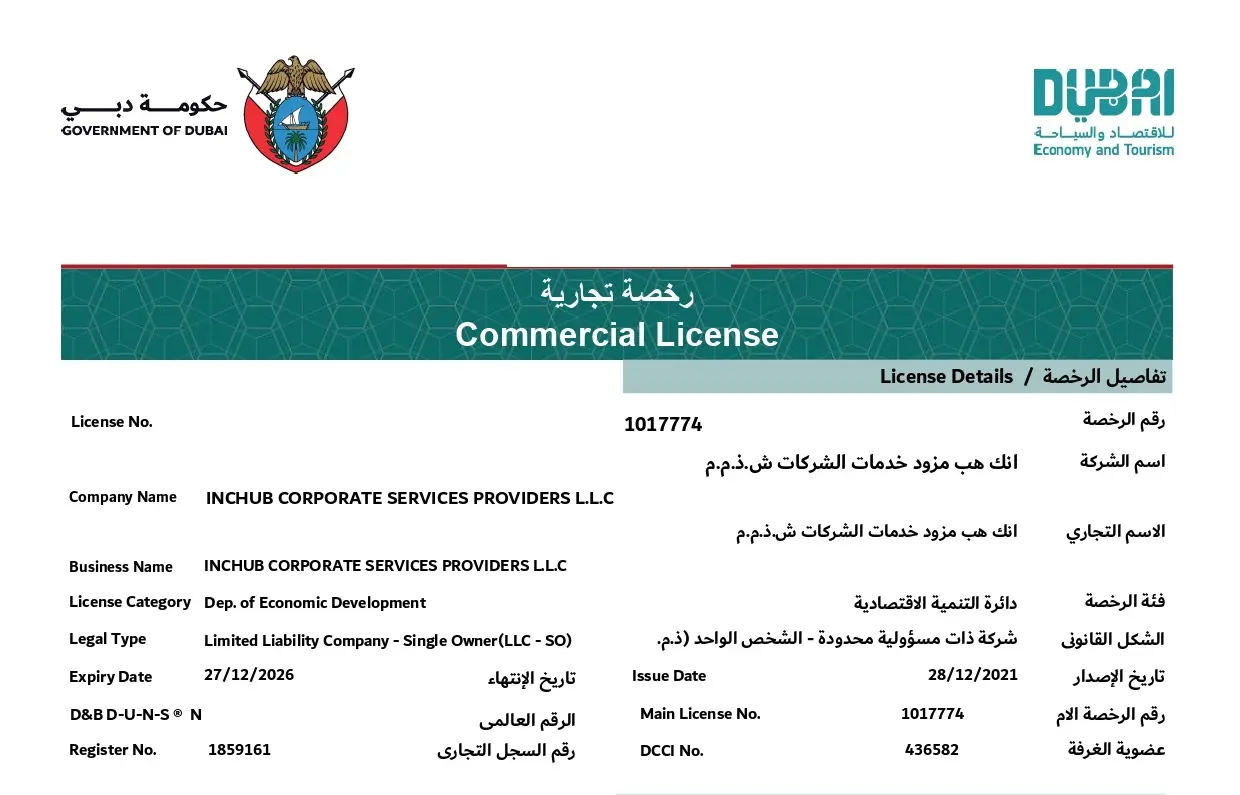
IncHub Corporate Services Providers LLC is a duly licensed business operating in the United Arab Emirates, authorised to provide corporate and business setup consultancy services in accordance with its trade licence.
What Is Dubai Industrial City?
Dubai Industrial City (DIC) was officially launched in November 2004 as part of Dubai’s strategy to diversify its economy and build a strong industrial base. As a Dubai Industrial City free zone, it is organised into six sector-specific zones under a deliberate masterplan, clustering businesses in the same industry to reduce logistics costs, minimise waste, and encourage resource sharing between factories.
Food and beverage is currently DIC’s most active sector: over 25 new customers leased 1.7 million square feet of industrial space in 2024, with tenants including Al Barakah Dates, Asmak, Patchi and a major new ice cream factory. Other zones cover building materials, transportation and automotive assembly, and industrial chemicals, with chemical operations subject to Dubai Civil Defence and Ministry of Climate Change and Environment (MOCCAE) compliance.
Who Is Dubai Industrial City For?
Food and beverage manufacturers and processors, DIC’s most active sector by recent investment
Building materials manufacturers, including glass, ceramics, cement and mineral-based products
Automotive and transportation equipment manufacturers and assemblers
Industrial chemical, coatings and adhesives producers, subject to Civil Defence and MOCCAE compliance
Manufacturers shipping by air freight, given proximity to Al Maktoum International Airport, particularly pharmaceuticals, food and electronics
What Dubai Industrial City Is Famous For: Sector Profile and Core Commercial Case
Dubai Industrial City is famous as the UAE’s largest dedicated industrial zone, home to Nestlé, Unilever, Agthia, Mondelez and hundreds of food and beverage manufacturers alongside building materials, automotive, chemical and heavy machinery companies. For businesses considering Dubai Industrial City company formation, the zone is particularly relevant because of its manufacturing infrastructure and industrial ecosystem.
It is also known for the MOIAT Industrial Production Certificate pathway that allows manufacturers to qualify for “Made in UAE” status, customs duty exemptions on raw materials and machinery, and access to government and semi-government procurement that requires local manufacturing credentials.
The core commercial problem it solves: Dubai Industrial City helps manufacturers establish a local production base in the UAE. UAE government procurement can favour local manufacturers, especially in food and beverages, where institutional buyers such as schools, hospitals and military organisations may prefer or require UAE production capacity. Companies importing finished goods may not have the same access to these opportunities. DIC’s MOIAT certificate pathway lets manufacturers prove UAE production, qualify for relevant procurement lists, and access customs exemptions on imported machinery and materials.
License Types Available at Dubai Industrial City
Company Structures at Dubai Industrial City
Setup Costs
| Item | Typical Cost (AED) |
|---|---|
| SME industrial package | From approx. 28,000 |
| MOIAT minimum capital (full Industrial Production Certificate) | Approx. 250,000 |
How to Set Up a Company in Dubai Industrial City
Key Benefits of Setting Up in Dubai Industrial City
Six dedicated sector zones within one industrial authority:
DIC organises manufacturers into six sector-specific zones covering food and beverage, building materials, automotive, chemicals, machinery and base metals, clustering businesses in related industries to reduce logistics costs and enable resource sharing
Direct Etihad Rail freight terminal within the zone:
DIC connects directly to the Etihad Rail freight terminal, providing a logistics advantage for heavy industrial goods movement across the UAE
AED 350M+ F&B investment in 2024:
DIC’s food and beverage sector attracted over AED 350 million in investment in 2024, strengthening the zone’s food manufacturing and supply chain ecosystem
MOIAT Industrial Production Certificate:
The federal MOIAT certificate can provide eligible manufacturers with customs duty exemptions on qualifying imported machinery and raw materials
Scalable industrial land leasing supporting business growth:
DIC offers scalable land leasing, allowing manufacturers to start with a smaller footprint and expand their production area over time without moving to a different zone
When Dubai Industrial City May Not Be the Right Fit
DIC vs JAFZA vs Dubai South
Dubai Industrial City, JAFZA and Dubai South serve overlapping manufacturing and logistics models in different ways. IncHub compares each one so you choose the authority that matches what your business actually needs, not just the most recognisable name.
| Factor | DIC | JAFZA | Dubai South |
|---|---|---|---|
| Core Focus | Sector-clustered manufacturing & F&B | Port trading, heavy industry & logistics | Aviation, logistics & e-commerce |
| Location | Dubai, near Al Maktoum International Airport | Jebel Ali, Dubai | Dubai South / DWC |
| Logistics Access | |||
| Manufacturing Model | |||
| Entry-Level Cost | |||
| MOIAT / Industrial Certification | |||
| Heavy / Hazardous Industry | |||
| Ideal Company Types | F&B, building materials, automotive & chemicals | Port traders, heavy manufacturers, bonded logistics | Aviation logistics, e-commerce & warehousing |
IncHub holds direct relationships across the UAE’s free zones, helping you choose the one that best fits your sector and regulatory needs, not just the one with the strongest brand.
Compliance and Ongoing Obligations
Standard UAE federal compliance obligations that apply to free zone companies, including corporate tax, VAT, UBO, accounting, license renewal, visa renewal and FTA amendments, should be assessed as part of dubai industrial city business setup. The Dubai Industrial City-specific obligations that may differ according to the activity are listed below.
Annual Audit:
Dubai Industrial City companies should confirm the current annual audit requirement at setup. MOIAT Industrial Production Certificate holders may also have additional reporting or registry-related obligations depending on their activities
MOIAT Industrial Production Certificate Compliance:
Manufacturers holding a MOIAT Industrial Production Certificate must maintain ongoing compliance with the applicable Ministry of Industry and Advanced Technology requirements. Changes in eligibility can affect access to associated customs benefits
Civil Defence and MOCCAE Environmental Compliance:
Companies handling industrial chemicals, hazardous materials or operating processes involving exhaust, waste or heat generation may need current Dubai Civil Defence certifications and, where applicable, MOCCAE approvals. These requirements can run on their own renewal schedules
What Our Clients Say
Watch how IncHub helped businesses set up in DMCC, Dubai’s flagship commodities free zone.
How IncHub Can Help You Set Up in Dubai Industrial City
IncHub advises manufacturers on sector zone selection within Dubai Industrial City’s six dedicated zones, coordinates the MOIAT Industrial Production Certificate process, manages Civil Defence and MOCCAE clearances for applicable operations, and supports ongoing compliance.
Our services for Dubai Industrial City company formation include:
- Free zone suitability assessment comparing DIC against JAFZA and Dubai South for your specific manufacturing activity, scale and Abu Dhabi vs Dubai market orientation
- Sector zone selection across DIC’s six dedicated zones (F&B, building materials, automotive, chemicals, machinery, base metals)
- MOIAT Industrial Production Certificate application and eligibility assessment, or Certificate of Non-Applicability where applicable
- Civil Defence and MOCCAE clearance coordination for chemical-handling and hazardous material operations
- Industrial facility, factory and land selection with lease negotiation support
- Investor and employee visa processing, medical and Emirates ID coordination
- Corporate bank account introduction with UAE banks experienced in manufacturing sector entity due diligence
- Annual audit coordination, MOIAT compliance, UBO maintenance and FTA amendment management
Frequently Asked Questions
SME industrial packages start from around AED 28,000. The dubai industrial city business setup cost depends on the entity type, business activity, facility size, lease requirements, approvals and other applicable charges. DIC does not publish a fixed fee schedule, so applicants should request a current personalised quote.
DIC is organised into six sector-specific zones, with food and beverage currently among the most active, alongside building materials, automotive and transportation equipment, chemicals, machinery and base metals. This sector-focused structure is one of the main reasons businesses consider the dubai industrial city free zone for manufacturing operations.
It is a federal-level certificate from the Ministry of Industry and Advanced Technology that may be required for qualifying manufacturing activities and can provide access to applicable customs benefits for imported machinery and raw materials, subject to the relevant requirements.
Free Zone Establishment (FZE), Free Zone Limited Liability Company (FZ-LLC), and a Branch of an existing foreign or UAE company. The appropriate structure should be selected during the dubai industrial city company registration process based on ownership and operational requirements.
Yes. DIC connects directly to the Etihad Rail freight terminal within the zone, providing an additional logistics option for industrial goods moving across the UAE.
DIC is well suited for light to medium-scale manufacturing with sector-specific clustering, while JAFZA accommodates a wider range of activities, including heavy industrial operations, supported by its proximity to Jebel Ali Port. Businesses considering dubai industrial city business setup should compare the two locations based on manufacturing scale, logistics requirements, facility needs and target markets.
Ready to set up your Dubai Industrial City company?
www.inchub.ae | Dubai, UAE