
Dubai Textile City Free Zone
Dubai’s Dedicated Free Zone for Textile Trading, Manufacturing, and Fashion
In short: Dubai Textile City, established in 2000 as a joint scheme between TEXMAS and Dubai Ports, Customs, and Free Zone Authority, allows extended duty-free storage of textile fabrics, a structure built specifically for re-export traders. Registration fees run approximately AED 10,000 to 16,000, with purpose-built warehouses, climate-controlled storage, showrooms, and manufacturing units supporting the full textile supply chain from raw material to finished garment.
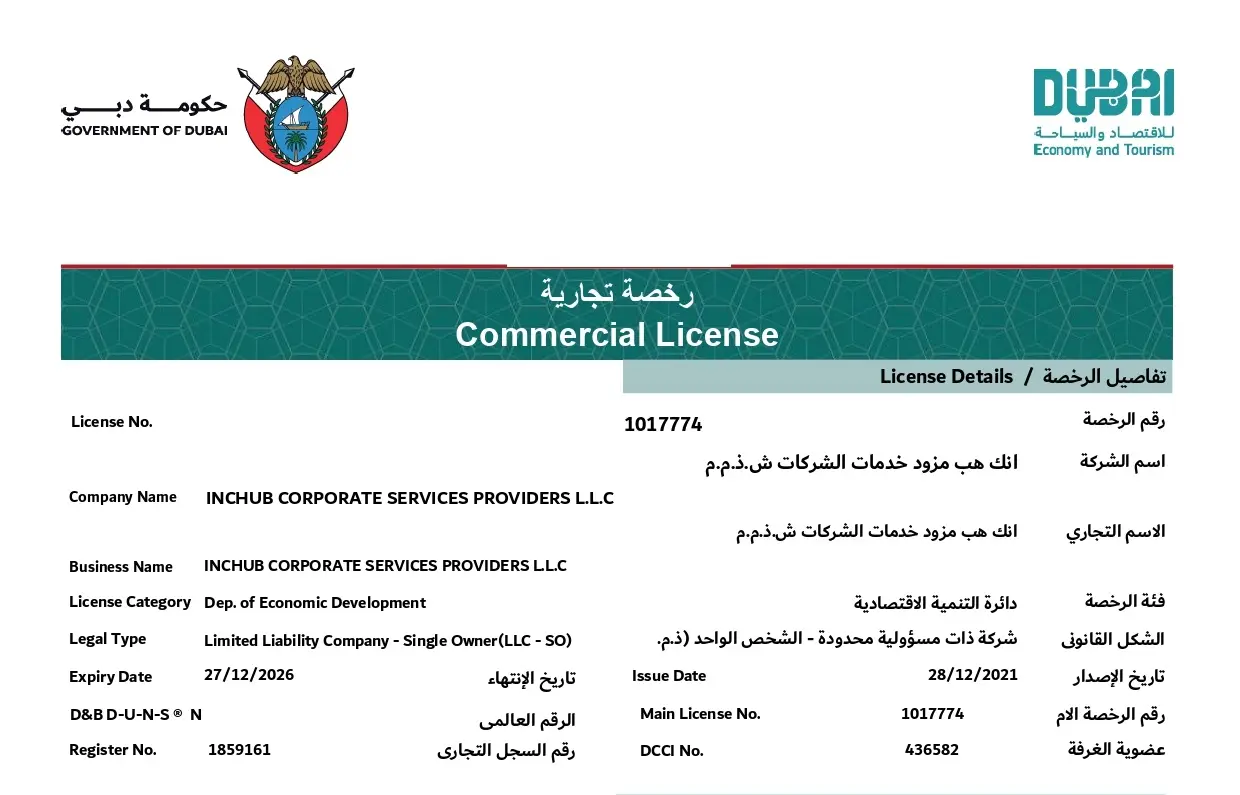
IncHub Corporate Services Providers LLC is a duly licensed business operating in the United Arab Emirates, authorised to provide corporate and business setup consultancy services in accordance with its trade licence.
What Is Dubai Textile City Company Formation?
Dubai Textile City company formation starts with understanding the commercial model, while the setup process starts with understanding what Dubai Textile City (DTC), also known as Dubai Textile Village, was established to do. Located in Al Warsan, DTC was established in 2000 as a joint scheme between the Textile Merchant Group (TEXMAS) and the Dubai Ports, Customs and Free Zone Authority. It was built specifically to bring discipline and dedicated trading infrastructure to Dubai’s textile and garment sector. The zone was purpose-built for wholesale traders, manufacturers, and the broader garment industry, with strong backing from Dubai Customs, which also assists members with visa processing.
A defining feature of DTC is its customs structure: the zone allows textile fabrics to be stored for extended periods without attracting customs duty, a meaningful advantage for traders whose business model is centred on re-export rather than local distribution. The zone’s infrastructure includes facilities that support textile city Dubai companies, including purpose-built warehouses, climate-controlled storage for sensitive materials, showrooms with specialised lighting, manufacturing units equipped for weaving, dyeing, printing, and stitching, and design studios. Exhibition spaces also host regular trade fairs connecting Dubai manufacturers with global buyers.
Who Is Dubai Textile City Company Formation For?
Textile manufacturers producing raw materials like fabrics and yarns
Garment manufacturers processing raw textiles into finished apparel
Wholesale traders managing bulk import and export of textile products
Fashion designers and design studios needing showroom and production space
Re-export-focused businesses benefiting from extended customs-duty-free storage
What Dubai Textile City Is Famous For: Sector Profile and Core Commercial Case
Dubai Textile City is famous among South Asian fabric merchants, particularly Pakistani, Indian, and Bangladeshi textile traders, as the only UAE free zone designed specifically around the economics of fabric import, storage, and re-export. Dubai Textile City companies consist primarily of wholesale fabric traders, garment manufacturers with dyeing and printing requirements, and textile showroom operators serving GCC retail buyers and international garment manufacturers.
The core commercial problem it solves: DTC solves the fabric re-export financing problem. The textile trading model works like this: a merchant imports 50,000 metres of fabric from Pakistan, not knowing exactly which buyers across GCC and East Africa will take it or in what quantities. If this fabric enters UAE mainland customs at the point of import, the merchant pays 5% customs duty on the entire consignment upfront, before a single metre is sold. If half the fabric is eventually re-exported to Bahrain or Kenya, the merchant must reclaim that duty, a slow and administratively complex process. DTC’s designated zone status solves this: fabric enters duty-free, sits in climate-controlled storage while buyers are found, and duty is only paid on the portion that enters UAE domestic consumption. Unsold or re-exported fabric never triggers UAE duty. For fabric merchants managing millions of dirhams of inventory across multiple buyers and destinations, this deferred-duty model is the entire economic case for DTC.
License Types Available at Dubai Textile City
Company Structures at Dubai Textile City
Setup Costs
| Item | Typical Cost (AED) |
|---|---|
| Registration/entry-level license for Textile City Dubai company formation | Approx. 10,000 to 16,000 |
| Non-compliance penalties (late renewal, standards violations) | Approx. 1,000 to 10,000 |
Dubai Textile City Company Formation Process
Key Benefits of Setting Up in Dubai Textile City
Extended duty-free fabric storage
Dubai Textile City’s defining feature is the ability to store textile fabrics for extended periods without attracting customs duty, a structure built specifically to support re-export traders who need time between import and resale without duty cost.
Climate-controlled warehousing
DTC’s warehouse infrastructure includes temperature and humidity control for fabric and yarn storage, preventing quality degradation that uncontrolled storage can cause for premium textiles.
118 manufacturing blocks
Purpose-built manufacturing units for dyeing, printing, weaving, and stitching, equipped with ventilation, exhaust extraction, and chemical disposal systems that standard commercial free zone buildings cannot safely accommodate.
Specialised showroom lighting
Retail and showroom spaces include textile-grade lighting designed for accurate colour rendering, directly relevant to buyers making purchasing decisions on fabric quality and colour accuracy.
Regular trade fairs
DTC hosts periodic trade exhibitions that directly connect on-site manufacturers with international textile buyers, a sales channel built into the zone’s operational model, and a useful consideration for textile city Dubai companies.
When Dubai Textile City May Not Be the Right Fit
Dubai Textile City vs JAFZA vs Hamriyah
Dubai Textile City, JAFZA, and Hamriyah serve different textile models. IncHub compares duty-free fabric storage, port-side bulk flows, and larger industrial garment manufacturing so the authority matches the trade pattern.
| Factor | Dubai Textile City | JAFZA | Hamriyah |
|---|---|---|---|
| Best fit | Textile trading, manufacturing, fashion, and re-export storage | High-volume bulk textile commodity flows through Jebel Ali | Garment manufacturing at scale on a larger industrial footprint |
| Location | Al Warsan, Dubai | Jebel Ali, with port adjacency | Northern Emirates |
| Customs model | Extended duty-free fabric storage; duty only on the portion released into UAE domestic consumption | Bonded-zone infrastructure for bulk commodity flows that are not built around DTC’s re-export storage model | General industrial facilities, without DTC’s textile-specific storage structure |
| Facilities | Warehouses, climate-controlled storage, showrooms, 118 manufacturing blocks, design studios | Port-adjacent bonded infrastructure for high-volume textile commodity trade | Larger industrial land at competitive cost; RAKEZ is the other Northern Emirates option in the same comparison |
| Entry-level licence | Approx. AED 10,000 to 16,000 | Chosen for port adjacency and bonded flows, not a published DTC-style entry fee in this guide | Positioned on competitive industrial cost and scale |
| Ownership | 100% foreign ownership; no local sponsor | Compare ownership rules with the authority before filing | Compare ownership rules with the authority before filing |
| Designated Zone (VAT) | Yes, under Cabinet Decision No. 59 | Confirm designated-zone treatment for the specific goods flow | Confirm designated-zone treatment for the specific goods flow |
IncHub checks whether the activity genuinely benefits from DTC’s duty-free storage model before recommending it over JAFZA or a generalist trading zone.
Compliance and Ongoing Obligations
Standard UAE federal compliance obligations that apply to all free zone companies (corporate tax, VAT, UBO, accounting, license renewal, visa renewal, and FTA amendments) are documented in full in IncHub’s UAE Free Zone Compliance Guide. The Dubai Textile City-specific obligations that differ between zones are listed below.
Annual Audit
Companies operating in DTC should confirm the current annual audit requirement with the DTC Free Zone Authority at setup. Companies subject to QFZP assessment will require audited financial statements as a condition of maintaining free zone corporate tax treatment.
Metric System Measurement Compliance
All textile materials handled, stored or traded within Dubai Textile City must be measured and documented using the International System of Units. Non-metric measurement records are not compliant with DTC operational standards and attract administrative penalties.
Non-Compliance Penalty Exposure
Violations including late licence renewal, failure to meet operational standards, or non-compliance with DTC measurement and handling requirements can result in fines of AED 1,000 to AED 10,000 per violation. These penalties apply independently of FTA administrative penalties.
Bonded Fabric Storage Customs Compliance
Textile fabrics stored under DTC duty-free storage must comply with UAE Customs supervision requirements. Any release of bonded inventory into the UAE domestic market triggers import duty and VAT obligations at the point of release, not entry.
What Our Clients Say
Watch how IncHub helped founders set up and run companies in the UAE.
How IncHub Supports Dubai Textile City Company Formation
Among Dubai Textile City business setup consultancies, IncHub supports textile manufacturers and wholesale fabric traders through the Dubai Textile City setup, advising on the duty-free storage compliance rules governing inventory, coordinating mandatory metric measurement compliance, and managing the non-compliance penalty exposure that DTC operational standard violations attract.
Our textile city Dubai company formation services include:
- Free zone suitability assessment comparing DTC against JAFZA and generalist trading zones for your textile, fabric, or garment activity and trade flow model
- Licence type selection (trading, textile, manufacturing, or fashion) and facility selection (warehouse, showroom, or manufacturing unit)
- Bonded zone customs compliance advisory for duty-free fabric storage operations
- Metric measurement compliance programme setup and DTC operational standard management
- Trade name reservation and DTC Free Zone Authority application coordination as part of our textile city Dubai company formation services
- Investor and employee visa processing, medical and Emirates ID coordination
- Corporate bank account introduction with UAE banks experienced in textile sector due diligence
- UBO maintenance, VAT registration, and FTA amendment management within our textile city Dubai company formation services
Frequently Asked Questions
Registration fees for textile city Dubai companies typically range between AED 10,000 and 16,000, varying by business type and scale of operations. Confirm exact current fees directly with the DTC Free Zone Authority. Dubai Textile City business setup consultancies can also help interpret the current fee structure.
DTC allows textile fabrics to be stored for extended periods without customs duty, a structure built specifically to support re-export-focused traders, alongside purpose-built showrooms and manufacturing units for the textile sector.
Free Zone Establishment/Company as an independent legal entity, or a branch of an existing parent company.
Generally 1 to 10 visas, depending on license type and facility configuration.
Trading, textile, manufacturing, and fashion licenses, each suited to different parts of the textile and garment supply chain.
Violations such as late licence renewal or failure to meet operational standards can result in fines ranging from AED 1,000 to 10,000.
Ready to set up your Dubai Textile City company?
www.inchub.ae | Dubai, UAE